Balinese Dance Guide: From Rituals to the Cultural Shows
Traditional Balinese dance is one of the beauties of Bali island that makes anyone who sees it fall in love with it. The uniqueness of the hands, feet, and body movements along with the eyes wide open make Balinese dance such a prodigious dance on earth. We should thank the dance creators and the well-trained and skillful Balinese dancers so we can enjoy the traditional Balinese dance.
The History of Balinese Dance
Before Bali got Hindu influences, ancient Balinese people had already invented ritual dances to fend off evil spirits and bad omens. Then in the early 15 century, when the Majapahit Kingdom fell, the Javanese artists escaped to Bali and brought a significant impact on the improvisation of Balinese dance.
During the era of the Balinese kingdom from the 15th to the 19th century, Balinese dancers innovated numerous dances, heralding a golden age for this vibrant art form. The people created drama dances like Gambuh drama dance which is popular as the source of most Balinese dances. Balinese dances encapsulate the essence of Balinese history and Hindu mythologies. Seamlessly intertwines Hindu and Balinese cultural beliefs through their artistry.
In Hinduism, dance serves as a symbolic expression of the world’s ongoing cycle of creation and destruction. This concept of balance between creation and destruction is frequently embodied by Shiva’s consort, known as Durga, but also referred to as Uma, Parvati, or Kali. This concept holds importance in Balinese Hinduism, where Rangda, a prevalent figure, shares many similarities with Durga.
UNESCO Recognition of Balinese dance as a World Heritage Site
In 2015, UNESCO are officially recognized traditional Balinese dance as an Intangible Cultural Heritage of Humanity, emphasizing its cultural and spiritual significance. This recognition grouped Balinese dance into three main genres. The first dance that UNESCO recognized is the Wali dance, a sacred ritual dance performed exclusively within temple ceremonies as offerings to the gods.
The second Bebali dance, semi-sacred dances that combine elements of storytelling with ritual functions, are often presented in ceremonial contexts.
And the finally, Balih-balihan dance represents entertainment or community dances for broader audiences, including cultural shows and festivals. UNESCO acknowledgment not only underscores the need to preserve these Balinese traditions for future generations but, also highlights how Balinese dance plays a central role in religious life and modern cultural tourism.
Since the early 1900s, traditional Balinese dances have become an essential source of entertainment and attractiveness to tourists who visit Bali. Three types of Balinese dances are distinguished by their function, let’s keep on reading!
 Source: Unsplash
1. Wali Balinese Dance
Bali or Wali dance is a traditional Balinese dance that is performed in spiritual ceremonies. The Wali dance does not tell a story, but only covers religious symbols. Here are some popular Wali dances.
Rejang Dewa
Rejang is a sacred ceremonial dance that must be performed by teenage girls who haven’t yet menstruated. Commonly, it is performed during the temple ceremony procession to entertain the visiting Gods and spirits. The word “Rejang” means “offering” which the dancers offer themself to Gods.
Sanghyang
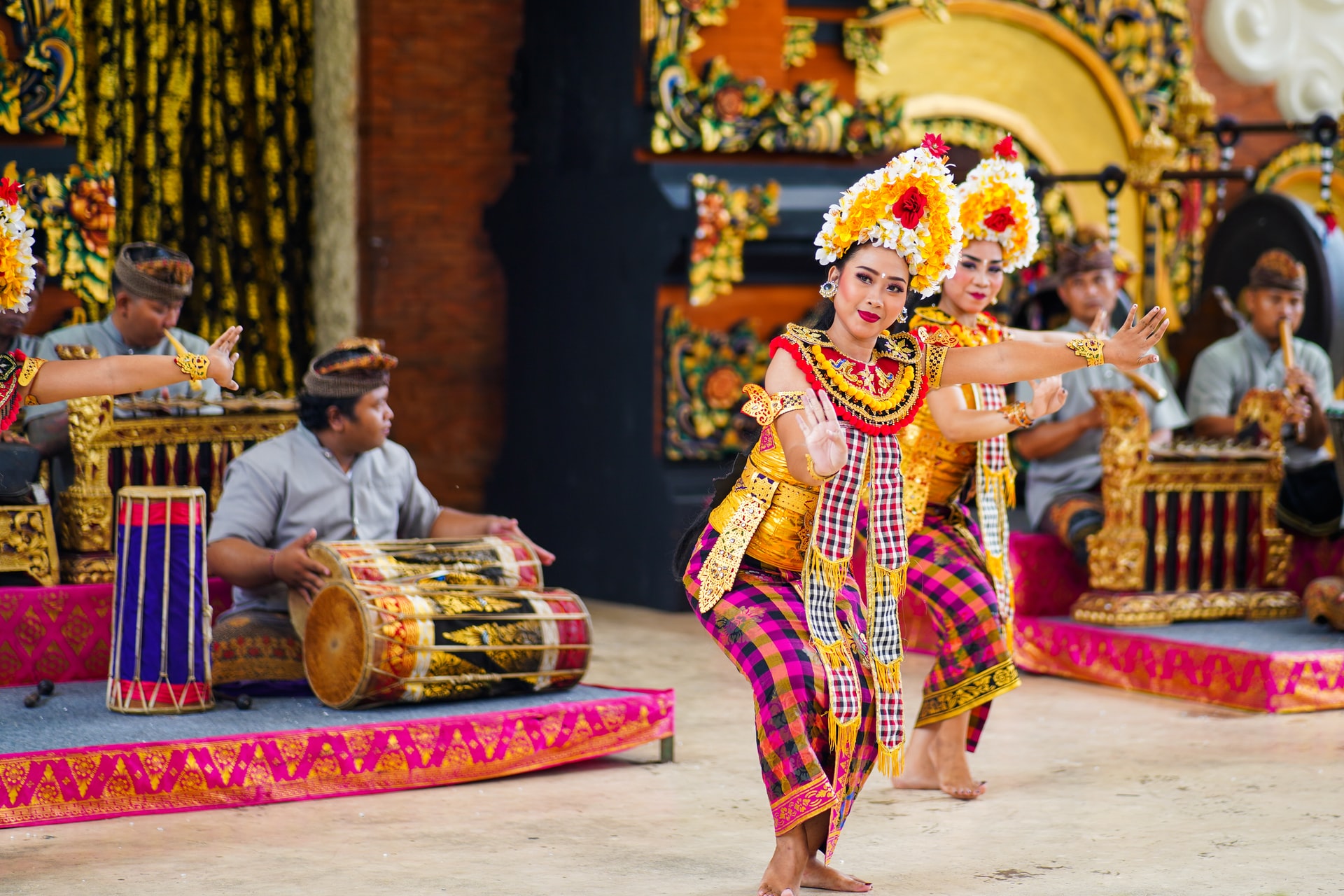
The Sanghyang dance, a sacred Balinese tradition from the Pre-Hindu era, showcases its trance-like nature as dancers are believed to be inhabited by divine manifestations or ancestral spirits. Performed during sacred ceremonies, this dance actively channels the power to ward off negativity and prevent disease outbreaks.
This dance is performed by male and female dancers while chanting worship songs. There are three important elements in this dance namely smoke or fire, Sang Hyang songs, and medium both in the form of a person or a doll. The Sanghyang dance has several types of dances such as Sanghyang Dewa, Sanghyang Dangklik, Sanghyang Dedari and many more.
 Source: Unsplash
Baris Dance
Also known as the War Dance, is performed by adult men in military formation at temples to celebrate Balinese warriors. “Baris” means “line,” representing warriors preparing for battle. This religious dance is performed during cremation ceremonies and temple anniversaries to welcome gods, goddesses, and ancestors who come to bless the people.
A skilled Baris dancer undergoes rigorous training to master the dance’s agility and grace. The powerful rhythm of Gong Kebyar and Gong Gede’s music enhances the intensity of their movements. Dancers enter holding spears, swords, or shields, depending on the type of Baris dance. Their firm steps sound like warriors heading to war, but the dance also welcomes gods and ancestors to earth.
Typically, groups of eight to forty men dance, dressed in traditional warrior attire with chest and back ornaments and headgear. A Baris dancer must embody fierceness, pride, alertness, compassion, and regret—the traits of a noble warrior.
The dancer’s movements start cautiously and deliberately as if searching for enemies. Upon reaching the stage’s center, the dancer gains confidence, stands tall, and remains still with quivering limbs. Suddenly, he spins on one leg, showing the emotions of a quick-tempered warrior.
Topeng Sidakarya Balinese Dance
Topeng Sidakarya dance is a traditional Balinese dance performed to ensure the success of sacred ceremonies. “Sida karya” means “complete and successful,” making this dance essential for spiritual success. The dance features a performer in a frightening white mask with large, crooked teeth and loose white hair. The dancer moves expressively and is accompanied by sacred chants, acting like a sage.
The dance is connected to Brahmana Keling, a powerful spiritual figure from East Java and brother to King Dalem Waturenggong. When Brahmana Keling visited Bali, the locals failed to recognize him and mistreated him. In response, he cursed the ongoing ritual, causing it to fail. The king, realizing his mistake, sought Brahmana Keling’s forgiveness. After the curse was lifted, Brahmana Keling was honored with the name Dalem Sidakarya. From that moment on, the Topeng Sidakarya dance became an essential part of every ritual, performed to bless the ceremony and ensure its success.
2. Bebali Dance
Bebali dance is a semi-sacred Balinese dance that functions as a ritual dance as well as an entertainment dance. It originated in the 14-19th centuries. Bebali Dance has a storyline, and character, and still nurtures traditional Balinese values. Oftentimes, it is performed during rituals or ceremonies and can be found in temple compounds. Nevertheless, you may enjoy these dances, provided you adhere to the rules for entering a temple. Here are some Bebali dances:
Topeng Dance
The Topeng dance is a drama dance where the dancers wear a paper or wooden mask which is known as the Balinese Mask. The word “Topeng” means mask. Therefore, this dance is also known as the traditional Balinese Masks Dance. The Topeng Dance is based on the story of heroines or human experiences in early kingdoms. This dance is used to be performed during ceremonies in temples.
Gambuh Dance
The Gambuh dance stands as the oldest Balinese dance drama, characterized by its intricate movements and revered as a pinnacle of dance artistry. Regarded as the progenitor of all Balinese Classic dances, its origins trace back to the 15th century, drawing inspiration from the tale of Panji (Malat) originating in East Java.
Based on history, the Gambuh dance is strongly related to the collapse of the Majapahit Kingdom in the 15th century. At that time, all of the repertoires of Javanese literature were brought to Bali.
 Source: Pixabay
3. Balih-Balihan Dance
The Balih-Balihan dance has a purpose for show and entertainment. Nonetheless, it is rich in moral values. Here are some Balih-Balihan dances:
Kecak Dance
Who doesn’t know Kecak Dance? Known as one of the most popular Balinese dances and also referred to as the Balinese Fire Dance, bare-chested men primarily perform it, chanting “cak, cak, cak.” The dance draws its inspiration from the Ramayana Epic. Interested in Kecak dance? Here is everything you should know about the Kecak dance performance in Bali.
Legong: The Traditional Balinese Dance
The Legong dance holds the highest respect among the island’s classical contemporary royal dances. Its name, “Legong,” originates from “leg,” signifying suppleness or elasticity. This dance narrative originated from the tale of a king’s discovery of a lost Maiden named Rangkesari.
The Legong dance came into being as royal entertainment in the 18th century, blending elements from age-old traditions like the Gambuh dance and the Sanghyang Dedari trance dance, which are rich in ancient animal movements. Typically, the Legong dance in Bali showcases the talents of three exceptionally skilled female dancers. The characteristic of this dance is the sophisticated movement of fingers and feet as well as the intimate facial expressions.
 Source: Pixabay
Janger Dance
Janger, a quintessential Balinese dance, has graced stages with its simple yet joyous movements. Originating in Bali during the 1930s, this dance features ten male-female pairs who animate the performance, set to the melodious tunes of gamelan or gender wayang.
The ensemble comprises women known as Janger and men referred to as Kecak, distinct from the Kecak Dance associated with Balinese fire rituals. These Janger dancers take turns performing and vocalizing the Janger melody. The belief is that women farmers, who sang together in groups to uplift their spirits and ease fatigue after working in the fields all day, originated the Janger dance. This communal singing evolved into a dance, fostering interactions with young men from neighboring villages. The dance’s structure is square, harmonized by the geguntangan orchestra. The male dancers, sitting with crossed legs, execute detailed hand movements inspired by Pencak silat, a traditional martial art form.
Meanwhile, the female dancers kneel, singing the Janger tune and creating intricate patterns with their arms and hands. Performers categorize Janger as a Bali-balihan dance, staging it for entertainment or to enrich the festive ambiance of ceremonies.
Pendet Dance
The Pendet dance is one of Bali’s oldest and most cherished traditions. Initially, it was performed as a sacred offering during religious rituals. However, as time has passed, the dance has taken on a new life. Today, the Pendet dance warmly welcomes guests, showcasing its graceful movements and rich cultural heritage in a way that connects both visitors and locals to the island’s vibrant history.
Recently, Balinese artists have adapted the Pendet dance into a “welcoming dance,” where performers sprinkle flowers before guests, reminiscent of Hawaii’s Aloha dance. Despite this evolution, the Pendet dance has not lost its sacred essence. It continues to embody deep religious significance, preserving its sacred elements and strong spiritual content.
In the early 1950s, Balinese choreographers created a version of the Pendet dance specifically to welcome tourists, known as the Puja Astuti Pendet dance. This adaptation of the Pendet dance holds the distinction of being Bali’s oldest welcoming dance, offering a warm and culturally rich greeting to visitors.
4. Wayang Wong: Balinese Dance With Ramayana Narrating
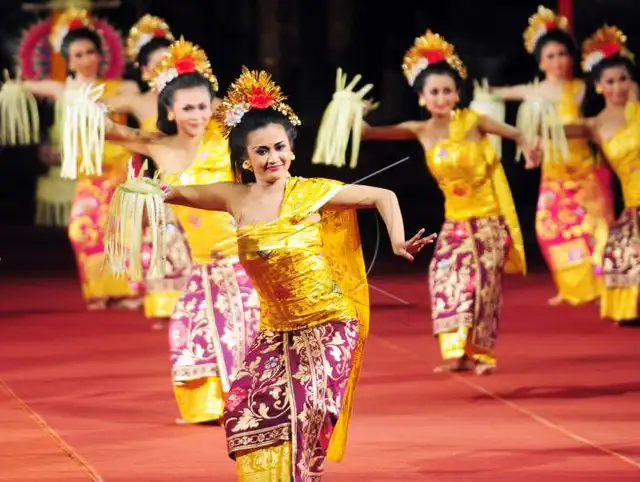
Wayang Wong, a traditional Javanese performance art, seamlessly blends dance, theater, and music into a captivating experience. Performers wear elaborate costumes with intricate designs and golden headdresses, complemented by expressive masks representing divine and demonic figures from ancient myths.
Each gesture, step, and movement showcases the exceptional skill and artistry inherited through generations. Spectators are treated to the dramatic reenactment of epic battles featuring gods, heroes, and demons. The dynamic poses, synchronized movements, and enchanting rhythms of gamelan music create an immersive experience that transports viewers to a legendary era of valor and divine intervention.
Source: Wikipedia
5. Arja: Opera Traditional Balinese Dance
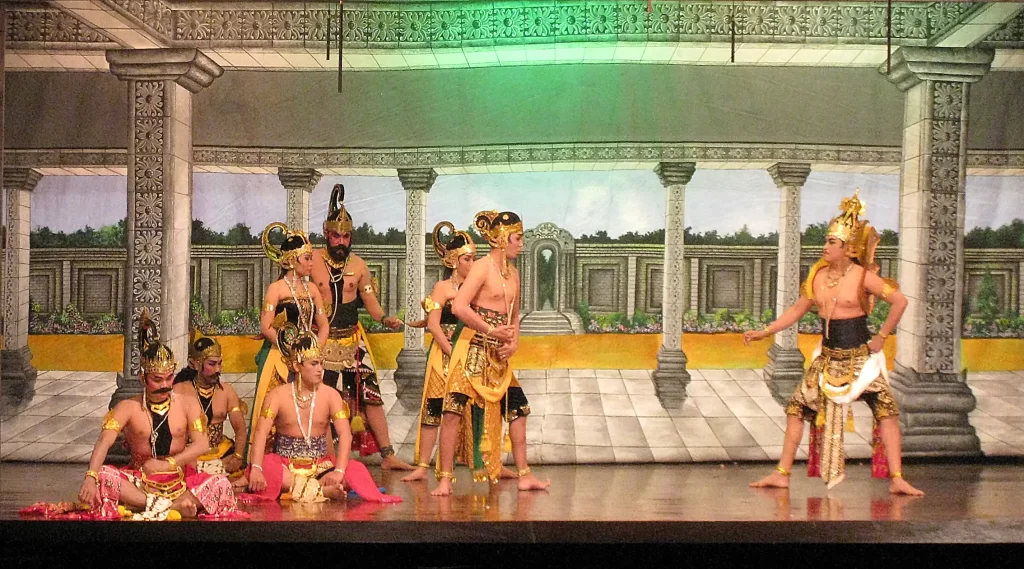
Arja Dance is one of the most interesting Balinese Traditional Operas that blend the elements of dance, theatre, and music into one composite form of art. These cultural treasures date from the early 19th century and are part of Bali’s rich heritage. The performers don brightly colored costumes with elaborate patterns furthered by heavy make-up to depict characters from classic Balinese stories and folklore like Ramayana, and Mahabharata.
It was expressive in gestures, dynamic with movements, and agile in complicated footwork; everything finds its place in the perfect synchronization with a live gamelan orchestra. A traditional ensemble, featuring metallophones, drums, gongs, and bamboo flutes, actively creates a rhythmic backdrop that amplifies the emotional impact of the performance.
The Arja Dance captivates audiences with its rich storytelling, blending humor, drama, and life lessons into a performance that feels both engaging and authentic. The performers deliver the dialogue through sung speech in traditional Balinese kawi, a poetic language, making it highly entertaining. The performance is filled with witty conversations and clever puns. Through excellent vocalization, movement, and acting, highly trained performers manage to captivate an audience.

Source: Wikipedia
Technique of Balinese Dance
In Bali, dancers begin learning their craft from childhood, engaging with Balinese Indonesian music with their hands even before they can walk. Formal training in Balinese dance often commences as early as age 7. This dance form intricately links movement with the rhythms of the gamelan, a musical ensemble unique to Java and Bali. The dance involves multiple levels of expression encompassing the face, eyes, hands, arms, hips, and feet, each synchronized to mirror the intricate layers of percussive sounds.
Balinese Dance Cultural Values
Balinese dance is a living cultural tradition shaped by an religion, community participation, artistic discipline, and shared identity. In sacred and ceremonial settings, certain dances are performed as offerings and form part of temple rituals. At the same time, other performances communicate mythology, moral teachings, historical memory, and the relationship between people, nature, and the spiritual world. Its preservation depends not only on dancers, but also on musicians, teachers, costume makers, families, temples, and village communities who continue to pass their knowledge from one generation to the next. Through this collective practice, Balinese dance teaches discipline, cooperation, respect, and responsibility while helping communities maintain a strong connection to their cultural heritage.
Balinese Dance Movements
Balinese dance movements was combine with posture, precise footwork, expressive hand gestures, facial expressions, and rapid eye movements that follow the rhythm and changing dynamics of the gamelan music. Several basic movement principles help dancers communicate character, emotion, and narrative throughout a performance:
- Agem: The main standing posture that establishes the dancer’s balance, character, and visual form.
- Tandang: Movements used by the dancer to walk, travel, or change position within the performance space.
- Tangkis: Transitional or connecting movements that link one posture or movement sequence to another.
- Tangkep: Facial expressions and emotional characteristics used to communicate the dancer’s role and feelings.
Changes in the eyes, eyebrows, head, fingers, shoulders, and body position can express emotions such as happiness, anger, fear, sadness, or love. The speed, energy, and intensity of each movement also help define the character and support the story being performed.
Faqs Balinese Dance
What makes Balinese dance sacred?
Balinese dance is more than art, it’s an offering to the gods. Performed in temples during religious ceremonies, these dances serve as a spiritual bridge between humans and the divine. Each style holds a unique purpose: Wali for pure temple rituals, Bebali for semi-religious events, and Balih-balihan for entertainment with cultural depth. Together, they reflect Bali’s traditions, harmony with nature, and deep-rooted values.
How do dancers train their eyes and gestures?
Training often starts in early childhood. With years of practice to perfect seledet (sharp, graceful eye movements), intricate mudras (hand gestures), and expressive facial control. Every movement is in sync with the rhythm of gamelan music, blending precision, emotion, and storytelling into a captivating performance.
When and where can I watch Balinese dance in Ubud?
Ubud is a cultural hub where traditional dance shows happen almost every night. Top spots include Ubud Palace, Saraswati Temple, and ARMA Museum, with performances usually starting at 7:30 p.m. Expect to see iconic dances like Legong, Barong, and Keris. For something unforgettable, catch the Kecak Fire Dance at Uluwatu Temple at sunset—an experience that combines fiery energy with ocean views.
Where To Learn the Best Traditional Balinese Dance?
Watching Balinese dance may have been a fun activity for you while in Bali. It may have been fun, but what’s next? Why don’t you try to learn it instead of watching them? Not only learning how to Balinese dance, but you can also see the process of dancers who are practicing to perform. We have compiled places you can visit to learn Balinese dance.
1. Kebo Iwa Studio Bali
Since its founding in 2010, Kebo Iwa has become a beacon for dance in Bali, known for producing top-notch dancers and showcasing Balinese dance art. The studio offers a dive into both traditional Balinese dances, including Joged Bumbung, Legong Lengkap, Legong Mini, and Penyembrahma, and contemporary dance, crafted by expert instructors, many of whom are graduates from the Denpasar Art Institute. Classes run for 120 minutes, welcoming dance enthusiasts of all ages to explore and express themselves through movement.
2. Puri Agung Balinese Dance, Denpasar
Puri Agung Denpasar Studio, a gem in Denpasar since 2013, stands out for its dedication to teaching Balinese dance to children, starting with the basics that form the foundation for all Balinese dance moves. At this studio, girls learn the graceful Condong Dance and Legong Keraton Lasem Dance, while boys master the Baris Dance. After mastering these, students can explore other dances based on their group’s preference. Training for Condong and Legong happens every Wednesday and Thursday, and Baris on Mondays and Thursdays. What’s incredible is that students learn for free!
3. Sri Padma Studio
Sri Padma Studio, located at Jln Yudistira, Banjar Kalah, Peliatan, Ubud, Gianyar, is a nurturing ground for children aged 6 to 10 to learn Balinese dance. The founder of Sanggar Sri Padma, driven by a deep passion for preserving Balinese dance, leads the studio with the support of like-minded colleagues, focusing solely on traditional Balinese dances. Offering a wide variety such as Rejang Dewa, Legong Lasem, Puspanjali, Pendet, and many others, the studio becomes a hive of activity on Sundays. The children often grace the piodalan celebrations in Bali’s major temples with their performances, showcasing the vibrant heritage of Balinese dance.
Updated Traditional Dance Schedule in Bali for 2026
Ubud’s evenings come alive with the sights and sounds of traditional Balinese dance performances. From graceful Legong dancers to the powerful chants of Kecak dance, there’s something magical to see almost every night. While schedules can change, here’s our schedule for you to know, and make your plan to attend traditional dance in Bali:
Ubud Palace (Puri Saren Agung)
Every night at 7:30 PM, the palace courtyard transforms into a stage for Bali’s most famous dances.
- Sunday: Legong Mahabrata
- Monday: Legong Dance
- Tuesday: Ramayana Ballet
- Wednesday: Legong & Barong
- Thursday: Legong Trance
- Friday: Barong Dance
- Saturday – Legong Dance
Other Venues to see Traditional Dance in Bali
Beyond the palace, you’ll find performances scattered across town:
- Ubud Water Palace – A beautiful open-air setting, often featuring Janger or Legong on select nights.
- Pura Dalem Temple – Popular for Kecak Fire Dances and Barong performances.
- ARMA Museum – Intimate setting for Legong, Topeng, and Wayang Wong.
- Padang Tegal Kaja – Known for its dramatic Kecak Dance at 7:00 PM.
Special Highlights to see traditional performance in bali
- Wayang Kulit Performance (Shadow Puppets) – Usually starts at 8:00 PM, often at Monkey Forest or cultural stages.
- Kecak Dance at the Uluwatu Temple – If you’re heading south, this sunset performance at 6:00 PM is unforgettable.
Travel Tips to See Balinese Dance
Always check with your hotel or the venue before heading out—times and performances can change without notice. Arrive 20–30 minutes early for the best seats.
Let’s Join and Enjoy the Experience of the Traditional Balinese Dance
Whenever you come to Bali, don’t forget to watch one of those Balinese dances. Balinese dance performances are readily available in Bali, particularly in Ubud. Moreover, if you’re fortunate, you might have the opportunity to witness these sacred or semi-sacred dances in Bali.
If you are looking for a Private villa in Ubud, go check Ubud Villas Rental by Red Lotus Property. You can ask the villa butler to accompany you to watch the Balinese dance performance. If you want to go by yourself, you can easily ask the villa’s team to organize a car to take you to your destination.