Lawar Bali: Another food not to skip in Bali
Besides being well-known for its culture and nature, Bali is also famous for its traditional dishes. Your trip to Bali will be more memorable by tasting one of those local foods. One of the most famous dishes is Lawar Bali. If you ever taste sate lilit, you may be familiar with lawar, too.
Lawar Bali is a mixture of vegetables, Balinese spices, coconut, shrimp paste, and minced meat. In the past, the meats that are used in making Lawar are pork and turtle. But nowadays, Balinese used to use pork, chicken, duck, kuwir and so on. We use vegetables like long beans, young jackfruit, star fruit leaves, young papaya, and more to make Lawar.
Lawar has a similarity with other Balinese foods as it also uses base genep (Red: Complete spices) like chili powder, shrimp paste, kaffir lime leaves, galangal, turmeric, onion, garlic, and cayenne pepper, pepper, candlenut, and many more.

Types of Lawar Bali
In general, the types of Lawar are grouped based on the type of meat that is used. For example, Lawar Babi (Red: Pork Lawar) use pork minced; Lawar ayam (Red: Chicken Lawar) uses Chicken meat; and many more. However, people in Bali mainly use pork and chicken for Lawar, as turtles are protected animals.
Lawar Barak
Lawar Barak is lawar mixed with half-ripe animal blood so its color turns red. The animal blood that is used is either pig or chicken blood. For some foreigners, Lawar Barak is an extreme food. Please do not eat this out of curiosity if you have some allergies toward raw foods. In Bali, locals often recommend this Lawar as one of the most delicious dishes. They find it addicting as the function of animal blood is to add to the delicacy.
Lawar Putih
Lawar Putih is a barrack lawar but does not contain any animal blood but instead uses coconut shavings in the batter. This lawar is often used for ceremonial purposes as well as red lawar. The taste of lawar putih is as much as lawar barak but without animal blood, you can feel the taste of coconut shavings in it.
Lawar Celeng (Pork)
As the name suggests, lawar celeng is a pork-based lawar mixed with other seasonings and is usually served at weddings or cutting teeth (mepandes) in Bali.
Lawar Nangka (Jackfruit)
Like in other types of lawar, we use young jackfruit as the main ingredient. We pick the jackfruit, clean it, and then chop or grate it to a suitable size. Some mix it with grated coconut and pork or chicken.
Lawar Blimbing (Starfruit)
Lawar Blimbing, which refers to the starfruit dish, doesn’t use the fruit itself but rather the leaves of the starfruit tree. Cooks separate the leaves from the stems and boil them. After boiling, they squeeze out the excess water to dry the leaves. Once dried, they mince the leaves and mix them with spices and meat.

Why You Shouldn’t Skip Lawar Bali?
Besides consisting of a mixture of half-ripe animal blood and other interesting facts about Lawar Bali that arouse your appetite, here are reasons why you should taste this local food in Bali.
Lawar Bali is a Fresh Food
People unfamiliar with lawar might hesitate to try this culinary delight, and understandably so, given its uncooked preparation method, which neither involves frying, boiling, nor steaming. Cooks finely chop ingredients like long beans, banana flowers, young jackfruit, grated coconut, and various meats such as chicken, beef, pork, and duck. They then hand-mix the ingredients with spices. We combine the ingredients, and the lawar is ready to be enjoyed. We pre-cook the meat and vegetables before mixing to ensure they are safe to eat and free from any health risks.
Having Some Complementary Foods
In Bali, people traditionally complement Lawar with other iconic Balinese dishes, creating a well-rounded and flavorful meal. We often wrap sate lilit, a popular twist satay made from spiced minced meat, around bamboo sticks and grill it to perfection, adding a smoky, savory element to the meal. Jukut ares, a light, and refreshing banana stem soup, provides a delicate balance with its subtle flavors, acting as a palate cleanser between the rich and spicy dishes. Together, these foods reflect the harmony and diversity of Balinese cuisine, offering a unique dining experience that highlights the island’s cultural and culinary heritage.
Making Lawar Bali is Time-consuming
Like other Balinese foods, Lawar also takes a long time in the making process. It approximately takes a half day or one night to make it, depending on how much the quantity of the Lawar they made.
Short Shelf Life
Lawar is a dish best consumed fresh, typically not lasting more than a day. After a day, it tends to sour and becomes unfit for consumption. This, lawar is usually eaten the same day it’s prepared. To extend its shelf life, people can wrap lawar in banana leaves and steam it until it turns brown. However, to keep it fresh, regular steaming is necessary. Alternatively, storing it in a refrigerator can also help.
Incorporation of Animal Blood
What might deter some from tasting lawar and label it as an extreme food is the use of animal blood, which gives the dish its distinctive red color. The type of meat determines which animal’s blood—whether chicken, pig, cow, or another—is mixed directly into the lawar without cooking. For those new to lawar, trying this version can be a unique culinary challenge, but for the Balinese, it’s a common practice. If you’re reluctant, you can opt for lawar that doesn’t include blood, usually identifiable by its absence of red color.
Lawar Bali as an Offering
In Bali, lawar is not only enjoyed as a meal but also used as an offering in religious ceremonies. During religious festivals or the traditional day of ngelawar (making lawar), people present the dish as a token of gratitude for nature’s bounty bestowed by the divine. This practice reflects lawar’s significance, embodying the richness of both flora and fauna, as a tribute to the natural abundance.
Ngelawar Tradition in Bali
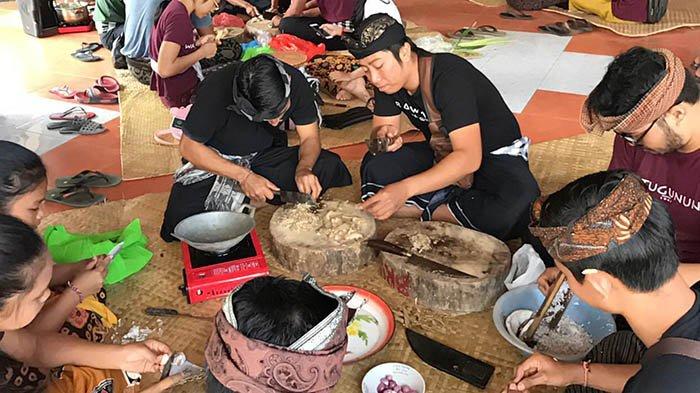
People in Bali often prepare Lawar for religious ceremonies and special occasions, just like many other traditional dishes. This is a form of gratitude of Balinese people, and usually they make it in large quantities. In general, Lawar is made by men. They gather together, have a chit-chat, and make jokes during making Lawar Bali.
Mostly the making process starts in the evening till midnight, then takes a break for several hours, and continues in the dawn because making lawar takes a long time. Making Lawar is everything about chopping and mincing the spices, meat, and vegetables. Chop all the spices until they are completely smooth. Bali’s Ngelawar tradition has been passed down through generations. Even though Lawar is mostly made on special occasions, nowadays you can easily find it at restaurants or food stalls or warung in Bali.
Explore more, taste more, and experience more, especially if you’re in Ubud. There are so many things to explore, not only the foods, but also cultures, and nature. Spending your nights in this modern-traditional town will give you an unforgettable experience in your life. Meet your comfy private villas in Ubud Villas Rental by Red Lotus Bali. Many luxury private villa ubud are ready to be chosen to meet your needs.