Melasti Ceremony: A Ritual to Cleanse the World
Once you come to Bali and see thousands of people walking to a beach with offerings on their head accompanied by Balinese music named Gamelan, you might see the Melasti Ceremony. If you haven’t come to Bali yet, you might have seen some videos or photos regarding the ceremony. But don’t misunderstand Melasti ceremony with Ngaben ceremony. It seems similar, but it is different.
Melasti is a purification ritual in Bali to cleanse the world from all impurities and bad karma. It is the biggest purification ceremony on the island to welcome Nyepi day. Nyepi Day is Balinese new year that celebrates in silence. Nyepi in Bali has some unique facts that may surprising you.
Unlike any other purification in Bali, Melasti is held two or four days before Nyepi day and involves a lot of Hindu people in Bali. Usually it takes time all day long. But some villages hold this ritual at different times due to certain reasons based on each village. This ceremony also carries out in the days leading up to other religious ceremonies that require cleansing and purification.
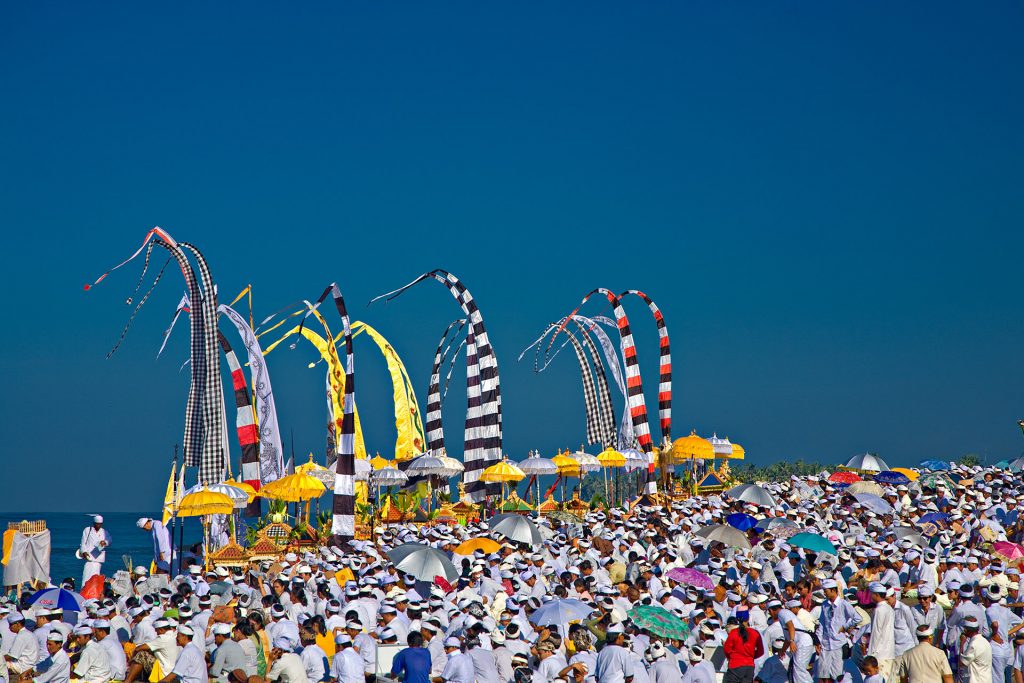 Photo source: Dominik Photography
When Is Melasti Ceremony in 2026?
In 2026, the Melasti ceremony falls on Sunday, March 16 three days before Nyepi Day on March 19. If you are planning to experience this sacred event, make sure you arrive in Bali by March 14 or 15 at the latest to settle in and prepare.
The exact date of Melasti changes every year because it follows the Balinese Saka calendar, not the Gregorian calendar. Most of the time, Melasti falls in March. Some villages also hold the ceremony at slightly different times based on their own local customs and traditions.
The purpose of the Melasti Ceremony
The purpose of the Melasti ceremony is to cleanse and purify the world. The term of “world” in this case has two different meanings. The first one is Bhuawana alit means a small world which symbolizes the human body. As well as Bhuawa Agung means a big world which symbolizes the universe.
Both Bhuwana Alit and Bhuwana Agung are cleaned and purified from bad spirits. It is done by acquiring and flicking Tirtha Amertha (holy water). This ceremony is very meaningful to Balinese people because it tells us the preciousness of life and the importance of cleansing for both ourselves and the universe and It highlights the needs of every creature to have a pure soul. Such purification is vital for safe guarding the world against negative forces and to ensure the continuation of existence.
 Photo source: Dominik Photography
How is The Procession of Melasti?
The Melasti ceremony’s procession is started by gathering together in Pura Desa, a temple that is located in the village’s center. People wear Balinese attire with white as the dominant color. Then they walk together line in line to a beach (commonly called Melasti beach) or a lake nearby.
Some of them bring Balinese umbrellas, some bring Balinese sacred flags named umbul-umbul, some bring Pratima shrines on their head, and the other people walk following them to the water source. On their way to the sea, some people called penabuh will play the Gamelan traditional music instruments.
Once they arrive at the sea or lake, all that sacred stuff will be put on a table to be purified. Usually the table is set to face the sea. In this table, the Hindu priest chants mantras while ringing a holy bell, and sometimes flicking the holy water. After that, the priest will guide worshippers to pray. After praying, the priest will flick Tirtha (Holy water) to the worshippers and give the Bija (holy rice).
When the purification ritual is done, people walk back to the temple, bring all the sacred stuff out and keep it there. Usually some roads that those people walk through will be blocked temporarily as the parade takes time and space.
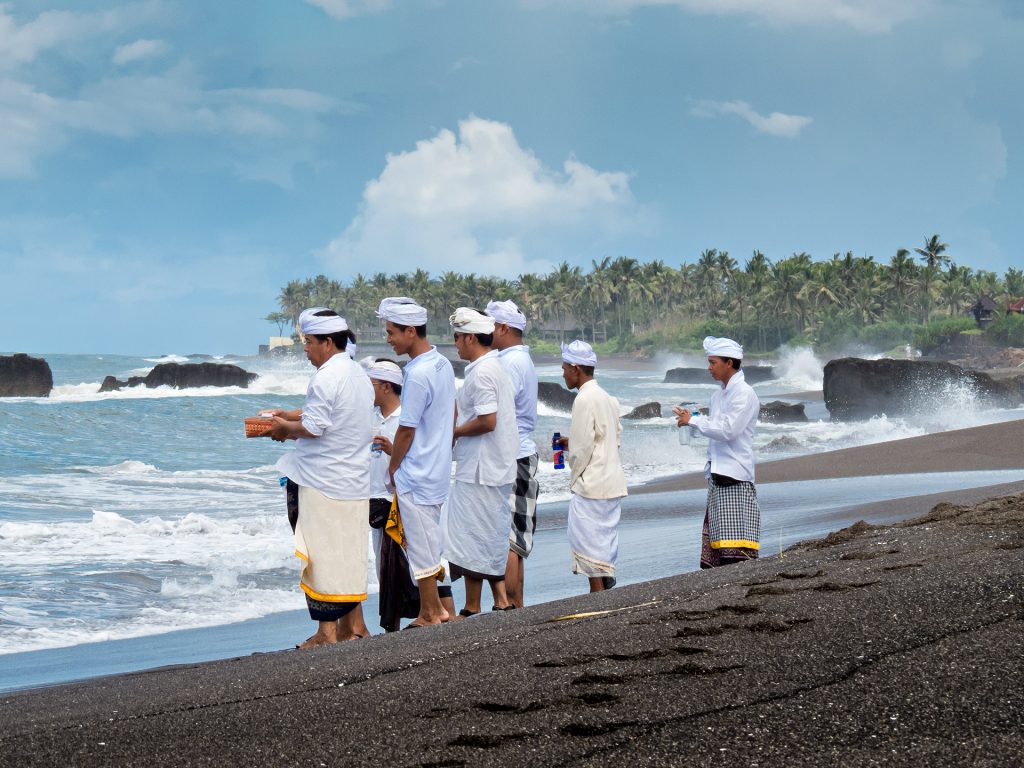 Photo source: Dominik Photography
Why is the Melasti Ceremony Carried Out in the Sea or Lake?
Water is a significant aspect in Balinese Hindu life. It is believed to be the source of life (Tirta Amerta). In Balinese Hindu belief, the function of water is not only to cleanse but also to purify themselves and the universe. Therefore, Melasti ceremony is carried out in the sea, lake or other water sources.
In these water sources, people drift away from all the filth (malaning) of the universe and drift away all the human sufferings. Afterwards, they will pick the Tirtha Amerta (holy water) up (Angamet) from the water source, then flick it to the sacred stuff and worshippers. This holy water is believed to give blessings to the human and the universe.

Tips for Visitors: How to Watch Melasti Respectfully
The Melasti ceremony is a sacred religious ritual, not a tourist attraction. If you have the privilege of witnessing it, here is how to do so respectfully:
- Dress modestly: Wear a sarong and sash when near the ceremony area. Many shops and temples will have sarongs available to borrow or rent. Avoid wearing revealing clothing.
- Do not walk between the procession and the sea: This is considered disrespectful and interrupts the ceremony. Always stand to the side of the procession route and keep a respectful distance.
- Keep noise to a minimum: The atmosphere during Melasti is purposeful and prayerful. Avoid loud conversations, and always speak softly.
- Ask before photographing: While many locals are comfortable with visitors taking photographs, it is polite to be discreet and avoid pointing a camera directly at worshippers in prayer.
- Do not touch the sacred objects: The statues, offerings, and ceremonial items carried in the procession are considered holy. Keep your hands to yourself.
- Be patient with road closures: Roads near beaches may be temporarily blocked during the procession. Plan your travel accordingly and allow extra time.
Where to See the Melasti Ceremony in Bali
Honestly, one of the best decisions you can make as a visitor is to plan your Bali trip around Melasti. You don’t need a tour guide or a special ticket, you just need to know where to be and when to show up.
The ceremony happens all across the island, wherever there’s a coastline, lake, or sacred water source. But if you want to see it at its most powerful, these are the spots worth going to:
- Sanur Beach: is probably the most popular choice, and for good reason. The processions here are long, organized, and genuinely moving to watch. Thousands of devotees in white pour onto the beach at sunrise, and the calm waters of Sanur make the whole experience feel incredibly serene. If it’s your first time watching Melasti, start here.
- Kuta Beach: brings a different energy. It’s busier, louder, and the crowds. Both locals and tourists are much larger. But the scale of it is something else. Watching hundreds of people carry offerings down that long stretch of sand with the waves behind them is the kind of thing you don’t forget easily.
- Nusa Dua: tends to attract some of the most well-organised processions on the island. The area is spacious, which means you can actually find a good spot to stand, observe respectfully, and take it all in without feeling like you’re in the way.
- Seminyak: Surprises a lot of people. Most visitors associate Seminyak with beach clubs and cocktails, but during Melasti week, the vibe completely shifts. The processions that move through here feel deeply in contrast to the usual tourist scene, and that contrast makes it even more striking.
- Jimbaran: is worth considering if you want something a little more low-key. The ceremony here feels more community-driven, less crowded, and you’re more likely to stand near local families who are genuinely happy to have you respectfully watch alongside them.
- Melasti Beach: tucked on the southern coast near Ungasan, is perhaps the most fitting place of all. The beach literally takes its name from the ceremony. It’s a bit of a drive from most tourist areas, but the cliffside setting and the way the procession meets the ocean here is unlike anywhere else on the island.
If you’re based in Ubud during your trip, don’t worry. Our team at Ubud Villas Rental knows exactly where the nearest processions are happening and can point you in the right direction. Just reach out before your trip, and we’ll help you plan it properly.
Experience Nyepi from a Private Villa in Ubud
If you want to experience both Melasti and Nyepi Day in the most memorable way possible, staying in a private villa in Ubud is the perfect choice. The peaceful surroundings, lush rice fields, and serene atmosphere of Ubud make the silence of Nyepi truly unforgettable.
The Ubud Villas Rental team. Managed by Red Lotus Property, can help you find the perfect villa for your Nyepi week stay, assist you in locating the Melasti procession near your accommodation, and share tips on experiencing Balinese culture authentically and respectfully.
Book your villa for Nyepi week 2026 now to secure your stay during one of the world’s most extraordinary cultural events. Spaces fill up quickly in the weeks leading up to Nyepi, so do not leave it too late.
Contact the Ubud Villas Rental team today to find your ideal villa and plan your perfect Bali Nyepi experience.