Top 10 Traditions in Bali You Should Know Before Visiting
There is a quiet rhythm to Bali that reveals itself slowly, from morning offerings to passing temple processions. But beneath this calm surface lies something more striking.
Imagine rituals where skin meets thorned pandan leaves, or fire becomes a tool for cleansing rather than fear. These are not performances, but living traditions, still practised with quiet certainty. Read on to find out more.
Quick Answer Traditions in Bali
- Balinese Hinduism and community values deeply shape traditions in Bali.
- Key traditions include Nyepi, Ngaben, Melasti, and Ogoh-Ogoh
- Many rituals aim to cleanse negative energy and restore balance between humans and the universe
- Traditions vary by village, with each desa adat preserving its own customs
- Rituals often follow the Balinese calendar and are tied to specific spiritual timings
Overview
Balinese traditions are rooted in Tri Hita Karana, a philosophy that promotes harmony between three elements: humans, nature, and the divine. This belief shapes both daily routines and large ceremonial cycles.
In Bali, spirituality is not separate from daily life. Offerings known as canang sari are placed every day, temples hold regular ceremonies, and communities organise rituals together. Most traditions are communal, meaning participation and cooperation are just as important as the ritual itself.
Another key concept is the balance between Bhuana Alit (the individual) and Bhuana Agung (the universe). Balinese people perform many rituals to maintain harmony between the physical and spiritual realms.
Top 10 Traditions in Bali
1. Nyepi (Day of Silence)
Nyepi marks the Balinese New Year, but Balinese people observe it through complete stillness instead of celebration. For 24 hours, the entire island pauses. No flights, no traffic, no visible activity. Homes remain dim, streets are empty, and even conversations are kept minimal.
This silence is intentional. Balinese people believe Nyepi cleanses the island of negative energy and creates space for reflection. For many, it becomes a rare moment to disconnect and reset, both spiritually and mentally.
2. Ogoh-Ogoh Parade
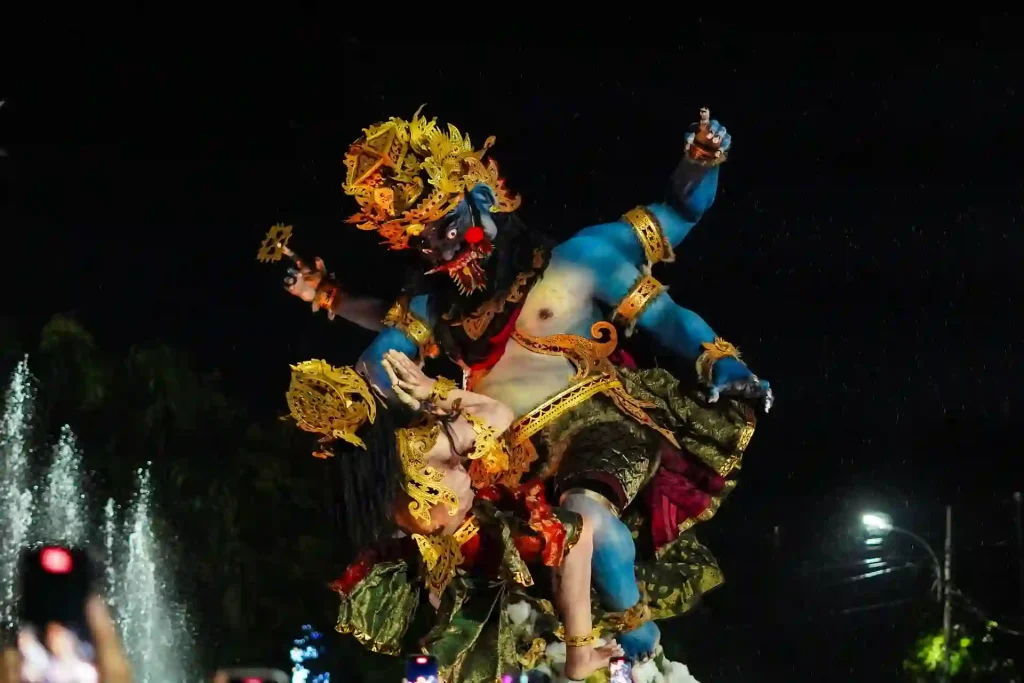
The night before Nyepi is the complete opposite. Villages come alive with the Ogoh-Ogoh parade, where large, often intricate statues representing Bhuta Kala (negative forces) are carried through the streets.
Accompanied by gamelan music and crowds of locals, the atmosphere feels intense and energetic. By the end of the night, Balinese communities burn the statues to symbolise the destruction of negativity and prepare the island for the silence of Nyepi.
Source: Unsplash
3. Melasti (Purification Ritual)
Melasti takes place a few days before Nyepi and is one of the most visually striking ceremonies. Communities gather in large processions, dressed in white and traditional attire, walking together towards the sea, lakes, or sacred springs.
Sacred temple objects are brought along and ritually cleansed in the water. This act symbolises washing away impurities, not just physically, but spiritually, allowing both individuals and the community to enter the new year with a sense of renewal.
4. Ngaben (Cremation Ceremony)
Ngaben is a central life-cycle ritual in Bali, marking the transition of the soul to the next realm. Unlike typical funeral ceremonies, Ngaben does not only represent grief. Instead, Balinese communities often hold Ngaben as a vibrant communal ceremony, reflecting their belief that the ritual releases the soul.
Elaborate structures such as towers (bade) and animal-shaped sarcophagi (lembu) are prepared, and the ceremony can involve large processions. It represents a final act of care, helping the soul move forward peacefully.
5. Mekare-kare (Perang Pandan)
In the village of Tenganan, locals perform Mekare-kare as part of a ritual honoring Dewa Indra, the god of war. Participants face each other using thorny pandan leaves as weapons and small shields for protection.
The ritual may look intense because participants can receive small cuts, but they perform it with discipline and respect. The act symbolises courage, devotion, and the willingness to endure discomfort as part of spiritual duty.
6. Omed-Omedan
Held in Sesetan the day after Nyepi, Omed-Omedan involves young, unmarried participants in a communal pulling ritual. Groups face each other while participants gently push them together, creating a moment that feels both playful and symbolic.
Despite its lighthearted appearance, the tradition reflects deeper meanings of social harmony, connection, and renewal after the stillness of Nyepi.
7. Trunyan Burial Tradition
In Trunyan village, funerary practices differ significantly from the rest of Bali. Instead of cremation or burial, bodies are placed under a sacred tree known as Taru Menyan.
What makes this unique is that the tree naturally neutralises odours, allowing the body to decompose without the typical effects. Over time, only bones remain. This practice reflects a different understanding of death, one that is closely tied to nature and local belief systems.
8. Temple Ceremonies (Odalan)
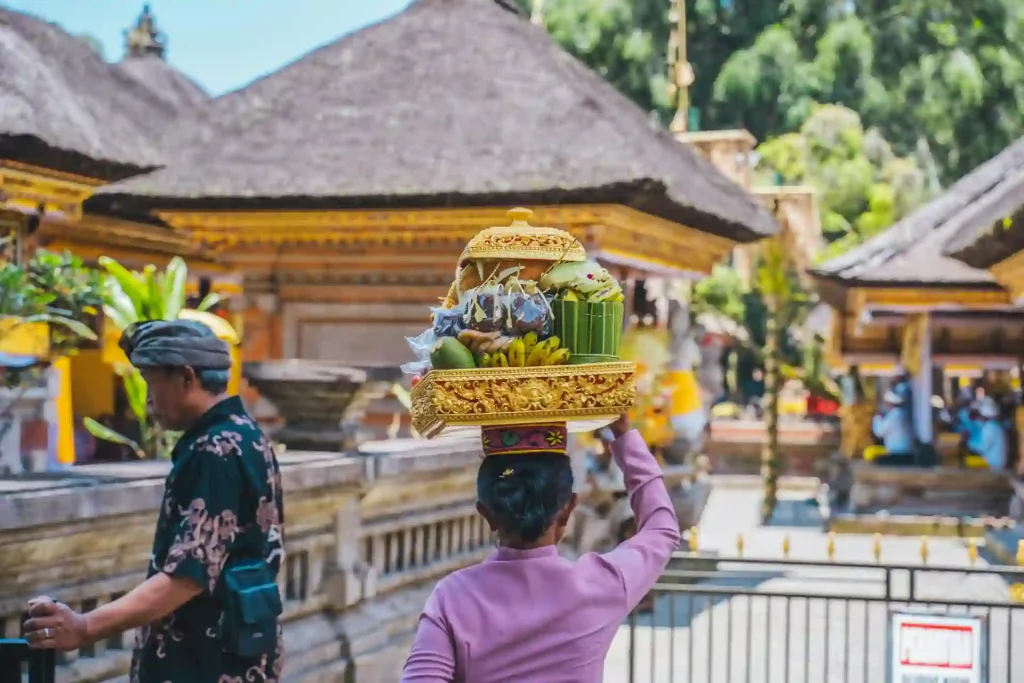
Every temple in Bali celebrates its anniversary, known as Odalan, every 210 days according to the Pawukon calendar. These ceremonies are not small events. They often last several days and involve offerings, traditional dances, and communal prayers.
Families and communities come together to prepare and participate, reinforcing social bonds. For visitors, these ceremonies show how Balinese people weave spirituality into daily life.
Source: Unsplash
9. Lukat Geni (Fire Purification Ritual)
Lukat Geni is a lesser-known but powerful purification ritual that uses fire as its central element. Typically held before Nyepi, participants engage with burning coconut leaves or torches in a symbolic act of cleansing.
Fire, associated with Dewa Brahma, represents transformation. Balinese people believe the ritual burns away negative energy, emotional burdens, and spiritual impurities, restoring balance within the person and their surroundings.
10. Mesuryak (Kuningan Tradition)
Mesuryak is a lively and joyful tradition held during Kuningan, particularly in Tabanan. Participants throw coins and rice into the air, creating a festive and energetic atmosphere.
This act is believed to symbolically send offerings to ancestors as they return to the spiritual realm. While it may appear chaotic, it carries a strong sense of gratitude, connection, and respect for lineage.
Tips / Key Considerations
- Understand the context
Many rituals are sacred, not performances. Observing quietly is important. - Dress appropriately
Sarong and sash are required in temple areas. - Follow local guidance
If unsure, ask locals or guides before entering or photographing ceremonies. - Be mindful of timing
Ceremonies can last hours or even days, often starting early or continuing into the evening. - Respect restricted areas
Some parts of ceremonies are only for participants.
FAQ
- Can tourists attend Balinese ceremonies?
Yes, many are open to visitors, especially temple festivals and public rituals. Respectful behaviour is essential. - Why are there so many ceremonies in Bali?
Ceremonies are part of maintaining spiritual balance and are tied to the Balinese calendar, which results in frequent rituals. - Are traditions the same across Bali?
No. Each village (desa adat) may have its own variations and unique traditions. - What is the purpose of purification rituals?
They aim to cleanse negative energy and restore harmony within individuals and the environment. - Is Lukat Geni dangerous?
Although the ritual involves fire, spiritual leaders guide it within a sacred ceremonial setting, giving the fire strong symbolic meaning rather than focusing on physical risk.
Enjoy and Get Your Experience Traditions in Bali
Bali’s traditions are not just something to see. They are something to feel, to witness quietly, and to carry with you long after you leave. From sacred ceremonies to everyday rituals, each experience reveals a deeper rhythm of life on the island.
Staying in Ubud brings you closer to this rhythm. Known as the cultural and artistic heart of Bali, Ubud is home to temples, traditional performances, and a rich collection of art galleries and museums that reflect the island’s heritage. It is a place where culture unfolds naturally, not as a spectacle, but as part of daily life.
For a stay that blends comfort with cultural immersion, Ubud Villas Rental offers a thoughtful base to experience Bali at a slower, more meaningful pace.