Ubud Wood Carving: A Masterpiece of Balinese Artistry
Are you looking for a unique and beautiful way to add some traditional art to your home? Ubud wood carving might just be the perfect solution. Ubud is known for its stunning wood carvings that showcase intricate designs and expert craftsmanship.
These carvings can add a touch of elegance and cultural richness to any space. Whether you’re a seasoned collector or just looking to bring a bit of Bali into your home, Ubud wood carvings are a must-see.
In this article, we’ll dive into the history and where to find these beautiful carvings. So, get ready to discover the beauty of Ubud wood carving and add a touch of Balinese charm to your home balinese wood carving.
Where to Find the Authentic Ubud Wood Carving?
The best place to find authentic Balinese wood carving location is in Mas village. Mas Village is located in the southern part of Ubud, about 5 km from central Ubud and roughly 20 km from Denpasar Bali airport. It is where all the wood carving of Ubud gained its fame. The village artwork’s popularity is famous in the national as well as worldwide. It began in the 1920s and was at its peak in the 1970s to 1990s.
Additionally, many recognized Ubud wood carving artists are born in Mas village. It is also home to workshops and galleries. Like in Mas Carving Center, you can see the artists at work and purchase their creations directly.
Other popular places to find Ubud wood carvings include Ubud Market. If you’re interested in learning more, many workshops and classes are available throughout the district. There are vendors selling a wide range of wood carving products. Mas Village is surrounded by other artistic villages, such as Celuk Sukawati, known for its silver and gold crafts; Tohpati, famous for its batik; Batu, known for its dance performances; and Ubud itself, renowned for its painting art.

Source: Unsplash
Wood Carving History in Ubud
The Balinese wood carving history is inseparable from the Brahmana Dang Hyang Nirartha. He is a priest from the Majapahit kingdom who came to Mas village and married the Headman’s daughter.
Long story short, Dang Hyang Nirartha planted a ”Tangi” tree in the Taman Pule temple area. He stated that the Mas village would flourish from wooden crafts one day. Since then, many people from this village were trusted to create divine symbols, masks and wood carvings for the kings in Bali.
Wood carving skill in Mas village has grown rapidly and spread all over the Ubud district. Today, it is still a thriving industry, with artists and workshops located throughout the village. The carvings are highly sought after by collectors and art enthusiasts all over the world.
Hinduism’s arrival in the 8th century in Bali heralded the inception of wood carving in Ubud, steering early Balinese carvers to produce temple adornments, sacred figures, and ritualistic artifacts. These early artisans transcended the mere role of craftsmen, embodying artists and spiritual mediators who infused their works with profound religious essence.
The 14th century saw Ubud organizing its artisans into “banjars,” or guilds, pivotal in nurturing craftsmen and safeguarding the transmission of skills and knowledge across generations. In these banjars, wood carving transcended craftsmanship to become a familial legacy, with distinct styles or motifs passed down through families.
The 1930s introduced a transformative phase with Western artists like Walter Spies and Rudolf Bonnet making Ubud their home, infusing the local art scene with Western techniques and principles. This fusion birthed a novel artistic language in wood carving, expanding its thematic breadth to encompass secular and naturalistic subjects alongside the traditional.
Currently, Ubud’s wood carving tradition flourishes, embracing both traditional Balinese myths and contemporary art forms. Ubud remains a pivotal wood carving hub, drawing collectors, aficionados, and tourists globally. The craft has also adjusted to the international market, producing artworks for both export and local markets.
Characteristics of Ubud Wood Carving
Ubud wood carving represent an individual style so characterized by great attention to detail and deep spirituality that it has brought fame to its creators. Craftsmen at Ubud carry on family traditions, who use locally sourced wood like ebony, mahogany, and teak for their masterpieces. The product was not merely decorative but rather told the folk stories with the inclusion of Balinese mythology together with elements of nature and daily life.
Since Ubud wood carving is deeply rooted in Balinese Hinduism, many of the carvings are inspired from Hindu mythology, such as the Ramayana and Mahabharata.
The carvings feature a range of subjects, from Hindu myth figures and traditional Balinese scenes to more modern designs. The carvings usally depict animals as well, such as birds, elephants, and monkeys, while others feature intricate patterns and abstract designs.
One of the defining characteristics of Ubud wood carving is the use of negative space. The carvings often feature intricate cutouts and patterns that capture the essence of Balinese culture in every curve and contour. This technique adds to the overall beauty and complexity of the carving.

Source: Pexels
How Is The Carving Process?
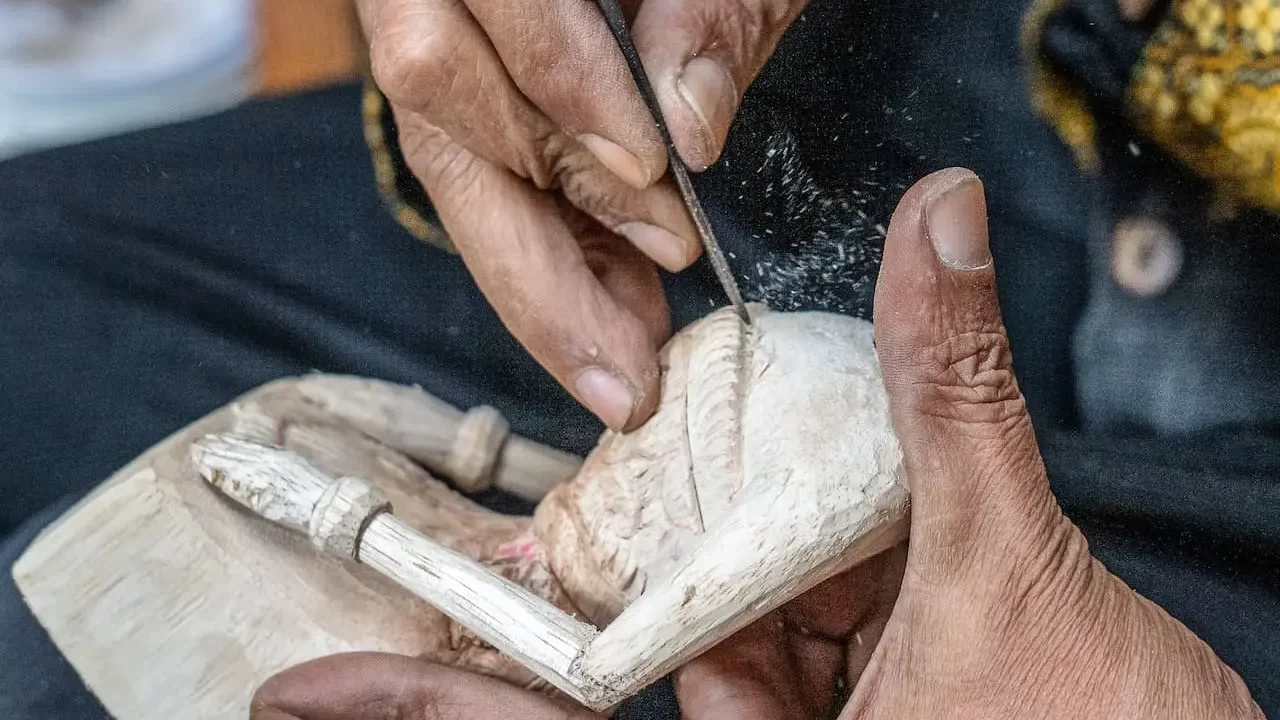
Ubud wood carving is a complex process that requires a great deal of skill and patience. Typically, the process begins by selecting the wood carving, which the carver chooses for its quality and suitability for carving.
Next, the artist will sketch out the design on the surface of the wood. Then, craftsmen carefully carve it out using chisels and other carving tools to achieve the desired effect.
After completing the carving, craftsmen sand and polish it to achieve a smooth surface. Some artists will also add a coat of varnish or paint to enhance the beauty of the wood and protect it from damage.
Maestro of Ubud Wood Carving
Ubud is home to many talented wood carving artists, some of whom have gained international recognition for their work.
Ida Putu Taman
Ida Putu Taman was born in 1873 and passed away in 1953. He came from a Brahmana dynasty in Mas Village and was highly skilled in wood carving. Ida Putu Taman arts was carried on by his only son, Ida Bagus Sadra, who was born in the village of Batanancak in 1925 and died in 1975. Becoming a wood sculptor was a legacy passed down from his father. Together with his wife, Dayu Rupi, he established ADIL Art Shop in 1958. He found great success in the 1970s, thanks to a loyal customer base from major travel agencies in Bali.
Ida Bagus Tilem
Ida Bagus Tilem was born on December 13, 1936, and passed away on November 20, 1993, at the age of 57. Utilizing his observations and his father’s tools, he was able to enhance his artistic creativity in sculpture. His works are known for their grand ideas and strong visual appeal that captivated audiences worldwide. He was selected to represent Indonesia at the New York World’s Fair in 1964 and held various exhibitions abroad, including in Thailand, Hong Kong, Australia, Germany, Austria, and Mexico. The Ubud wood carving and Mas Village have gained global recognition due to its impact.
Ketut Rodja
Ketut Rodja, born in 1902 and passed away in 1965, he came from a family of artists. There isn’t much media coverage about this close friend of President Sukarno. Many of his works are collected by the Proclaimer of Indonesian Independence. A statue of Krisna by Ketut Rodja was once selected as a master art piece by President Soekarno and presented to Indian Prime Minister Jawaharlal Nehru and Indira Gandhi during a state meeting. KP Rodja is recognized as a pioneer of art deco in Bali. He founded the first Art Gallery in Bali in 1955, which is still operational today in Desa Mas.
Nowadays, one of the most famous Ubud wood carving artists is I Wayan Winten. People know him for his intricate carvings of animals and scenes from Balinese mythology.

Source: Pixabay
What Kind of Wood Carving Products You Can Find Here?
Ubud wood carvings come in various forms, from small trinkets and figurines to larger statues and wall hangings. Some of the most popular types of Ubud wood carvings include:
- Masks: Traditional Balinese dances and ceremonies often utilize these masks, exhibiting high detail and intricacy levels.
- Statues: Small figurines or larger, more elaborate pieces can represent animals or scenes from Balinese mythology.
- Wall hangings: People hang these decorative pieces on the wall, and they frequently showcase intricate patterns and designs.
- Furniture: Craftsmen employ Ubud wood carving techniques to produce exquisite furniture items, including chairs, tables, and bed frames.
Maintaining Your Ubud Wood Carving
Ubud wood carvings are beautiful and unique pieces of art that require proper care to maintain their beauty and integrity. Here are a few tips on how to maintain your wood carvings:
- Keep it out of direct sunlight: Sunlight can cause the wood to fade and crack over time, so it’s best to keep your carving in a shaded area.
- Clean it regularly: Use a soft cloth to remove any dirt or dust that may have accumulated on the surface of the carving.
- Avoid exposure to moisture: Wood can warp and crack when exposed to moisture, so it’s important to keep your carving in a dry area.
- Use a wax or oil finish: Applying a wax or oil finish to your carving can help protect the wood and enhance its natural beauty.
Source: Pexels
Ubud Wood Carving Lessons
Here are some options for wood carving lessons in Ubud, Bali:
1. 3-Hour Wood Carving Master Class
The master class aims at both beginners and those with some experience in wood carving. It introduces participants to the fundamental techniques and tools used in traditional Balinese wood carving. The class focuses on creating a specific item, such as a mask, or an animal figure, depending on the preference of the group and the complexity of the designs.
Key Features:
- Duration: Approximately 3 hours, making it a convenient option for those who have limited time but wish to immerse themselves in Balinese culture.
- Location: Held in Ubud, known for its artistic communities and serene landscapes.
- Takeaway: Participants get to keep their creations, serving as a unique and personal souvenir of their time in Bali.
- Skills Gained: Introduction to the use of carving tools, understanding of wood types, and the process of transforming a block of wood into a piece of art.
2. Ubud Wood Carving at Mas Village
Mas Village in Ubud has earned renown for its wood carving. It stands as one of the main places in Bali where the tradition of wood carving remains vigorously alive. The village is about 5 kilometers south of the Ubud Center, making it easily accessible for travelers staying in Ubud. This class offers a more immersive experience into the Balinese culture of wood carving by taking place right in the heart of one of its most famous villages.
Key Features:
- Duration: Varies, with options for half-day or full-day classes, giving participants the flexibility to dive deeper into the craft.
- Location: Mas Village, providing a unique opportunity to learn wood carving in an environment that has been home to generations of wood carvers.
- Cultural Immersion: Beyond learning how to carve, participants also get a glimpse into the daily lives and traditions of the local artisans.
- Variety of Creations: While specific projects may vary, the focus is on traditional Balinese motifs, including flora, fauna, and mythological figures, offering a broad spectrum of inspiration.
Immerse Yourself in the Exquisite Artistry of Ubud Wood Carving!
Ubud wood carving is a beautiful and unique art form that has been a part of Balinese culture for centuries. Whether you’re a collector or just looking to add a touch of Balinese charm to your home. Ubud wood carvings are a must-see.
These carvings’ designs and expert craftsmanship add a touch of elegance and cultural richness to any space. So, the next time you’re in Bali, be sure to visit Ubud and discover the beauty of Ubud wood carving for yourself.
Are you planning on a trip to unveil the elegance of Balinese wood carving? Enhance your experience by booking a private villa in Ubud, where artistic inspiration meets luxurious tranquility. Immerse yourself in the beauty of craftsmanship and unwind in your own secluded oasis.
While planning to explore some exquisite wood carving, why don’t you look for a comfortable place to stay? Here we have a luxurious private villa Ubud by Red Lotus Bali Property. Unwind in your secluded oasis after exploring the rich craftsmanship, creating an unforgettable journey that combines artistry and indulgence!