The Enchanting Heritage of Barongsai Bali
Barongsai Bali Dance, a vibrant spectacle that brings to life the island’s rich myths and traditions. Famous for its stunning natural beauty, Bali is also home to this unique dance, a fascinating blend of storytelling and art. With its dramatic costumes and lively performance, the Barong Dance is not just entertainment – it’s a colorful journey into the heart of Balinese culture. Get ready to explore the timeless battle between good and evil, all through the rhythm and grace of one of Bali’s most iconic dances! Let get on and lear the history about it.
What is Barongsai Bali
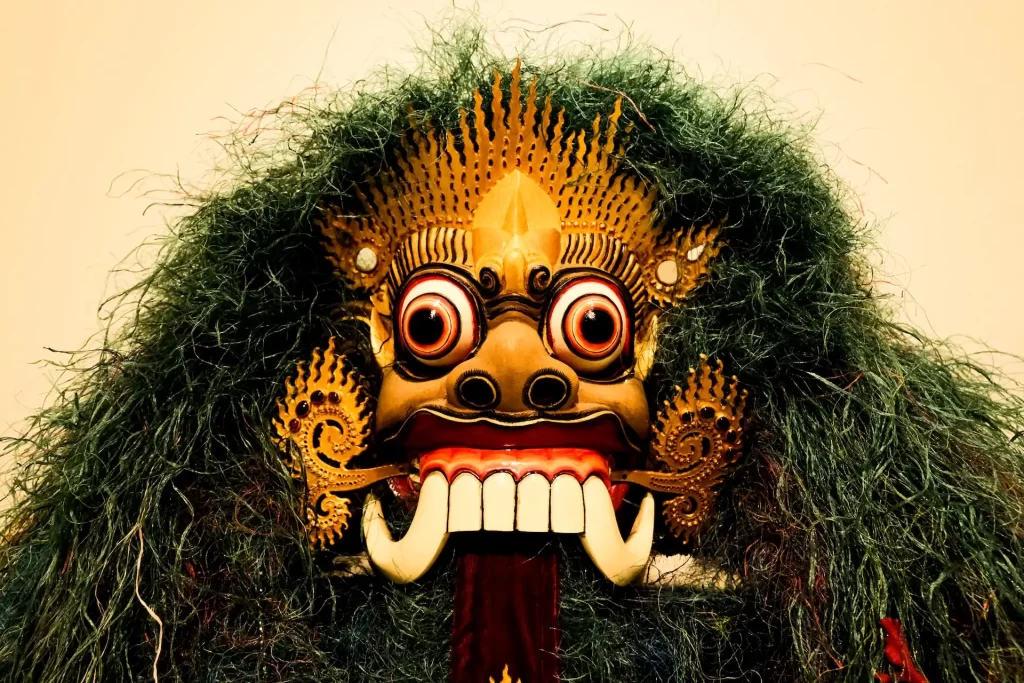
The history of Barongsai Bali dance reveals performers wearing large, four-legged animal costumes, typically resembling lions, and controlled by one or two dancers. This emblematic dance weaves a narrative of the eternal struggle between good and evil on barongsai.
Revered as the king of spirits and the commander of the forces of good, he stands in opposition to Rangda, the demon queen and the maternal figure to all spirit guardians in Balinese mythology. The Barongsai dance vividly portrays the eternal struggle between Barong and Rangda, symbolizing the ongoing conflict between good and evil.
Source: Unsplash
The Origin of Barongsai Bali
The Balinese Barong evolved from the Ponorogo Barong or Reog, introduced by King Airlangga when he sought refuge on the island of Bali to save himself. Along with the Ponorogo Barong, Airlangga also brought various forms of literary arts, Javanese script, and religious rituals.
The influence of the Ponorogo Barong on the Balinese Barong is evident when it appears without the peacock crown (Kucingan) and in the Rangda mask, which is shaped by the Bujang Ganong mask. Additionally, groups practicing mystical arts take inspiration from the behaviors of both young and old Warok, known for their magical powers, which remain preserved in Ponorogo. However, specific Barongsai circles now restrict these activities.
Thus, various types of Balinese Barongs emerged, featuring heads of different animals such as Pigs, Elephants, Dogs, and Birds, each becoming a source of pride for their respective cities in Bali.
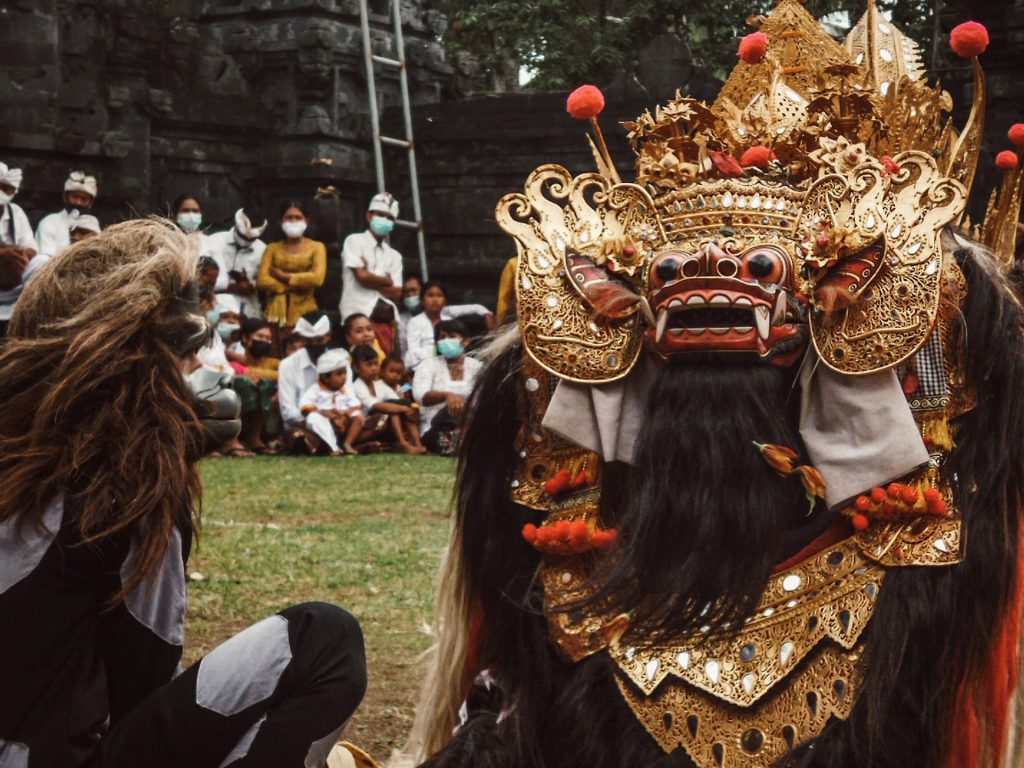
On the other hand, the Barong mask dance, along with the Sanghyang dance, is considered an original Balinese dance, predating Hindu influence. The indigenous people of Indonesia from Austronesian heritage often have similar mask dances representing ancestral spirits or nature; for example, the Dayak with their Hudoq dance or similar bear worship rituals. The term barong is believed to come from the local term ‘bahruang,’ which now corresponds to the Indonesian word meaning “bear.” This refers to a benevolent spirit, taking the form of an animal as a guardian of the forest.
 Source: Unsplash
Barong vs Barongsai: Know the Difference
The Barong Bali and Barongsai are distinct traditional performances from Indonesia and China, respectively, each with unique cultural significance, mythology, and presentation styles.
Barongsai Bali (Indonesia):
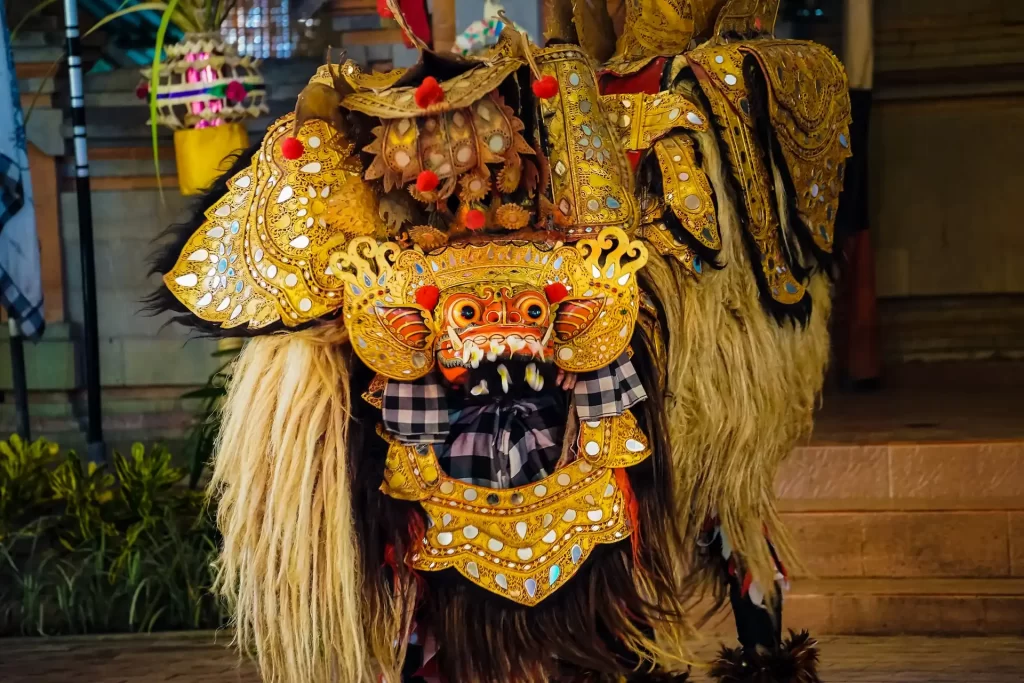
- Cultural Origin: The Barong Bali is deeply rooted in Balinese Hindu culture and mythology, primarily from the island of Bali, Indonesia.
- Mythology and Significance: It symbolizes a mythical creature, often resembling a lion, that represents good and protects against evil spirits. The dance typically narrates the story of the eternal battle between good, represented by Barong, and evil, represented by Rangda, a demon queen.
- Appearance: The Barong costume is elaborate and detailed, often resembling a lion, with intricate carvings and decorations. It’s worn by one or two performers.
- Performance Style: The dance involves complex movements, and dramatic expressions, and is accompanied by Gamelan music. It’s deeply spiritual and often performed in religious ceremonies and festivals.
- Cultural Integration: It’s a significant part of Balinese culture and religious practices, often tied to temple festivals and local traditions.
Source: Unsplash
Barongsai (China):
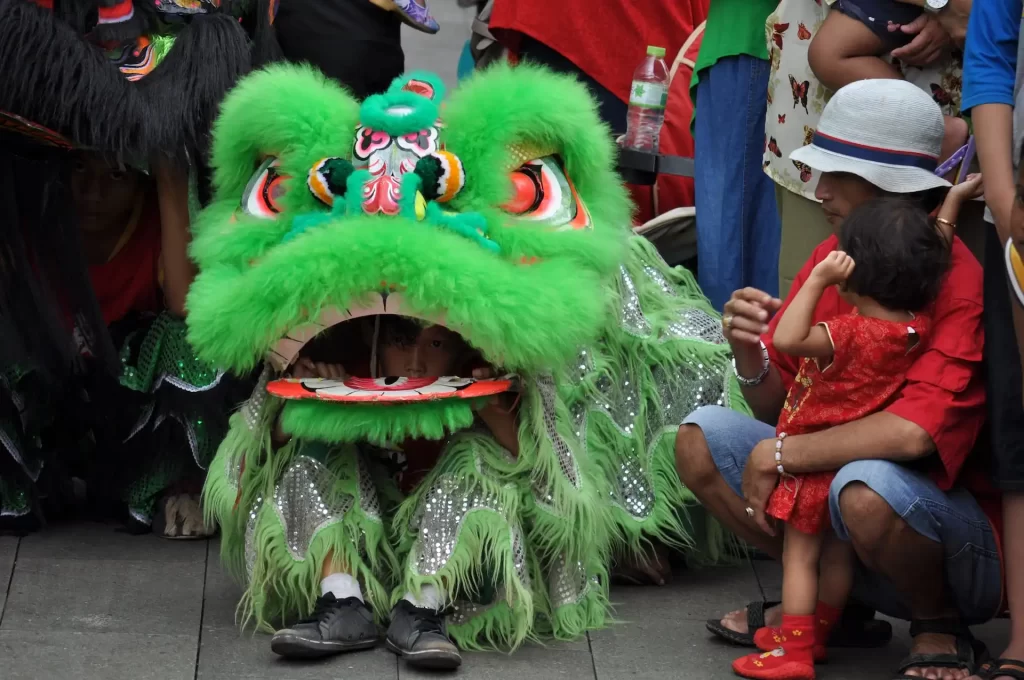
- Cultural Origin: The Barongsai, also known as the Chinese Lion Dance, is a traditional Chinese performance seen widely in China and other countries with significant Chinese communities.
- Mythology and Significance: The lion in Chinese culture is a symbol of power, wisdom, and good fortune. The dance is believed to bring good luck and is often performed during Chinese New Year and other significant events.
- Appearance: The lion costume in Barongsai is typically colorful and vivid, operated by two dancers. Unlike the Barong Bali, the lion here is more stylized and less realistic.
- Performance Style: The Barongsai involves acrobatic movements and martial arts elements. The performance is lively and often includes playful interactions to engage the audience.
- Cultural Integration: It is an integral part of Chinese cultural celebrations, widely performed in both religious and secular contexts.
Source: Unsplash
In summary, while both dances feature a lion-like creature and are rich in cultural heritage, Barong Bali is a spiritual and religious performance from Balinese Hindu culture. In contrast, Barongsai is a festive and acrobatic performance from Chinese culture, often associated with good luck and prosperity.
Where to Watch Barongsai Bali Dance
The Barongsai Bali Dance in Ubud, Bali, is a must-see cultural performance, showcasing the island’s rich artistic heritage. Witness the traditional dance in Ubud by attending scheduled performances at various locations of the barongsai dance bali.
1. Ubud Palace
Schedule: Wednesdays and Fridays at 7:30 PM
Price: IDR 100,000 per person
Addresses: Jl. Raya Ubud No.8, Ubud, Kecamatan Ubud, Kabupaten Gianyar, Bali 80571
2. Agung Rai Museum of Art
Schedule: Sunday – 19.00 – 21.00
Price: IDR 100,000 per person
Addresses: Jl. Raya Pengosekan Ubud, Ubud, Kecamatan Ubud, Kabupaten Gianyar, Bali 80571
3. Padang Tegal Kaja “Trena Jenggala”
Schedule: Thursday & Sunday – 19:00 – 21:00
Price: IDR 100,000 per person
Addresses: Jl. Hanoman No.20, Ubud, Kecamatan Ubud, Kabupaten Gianyar, Bali 80571
4. Tamansari Temple
Schedule: Monday – 19.30 – 21.00
Price: IDR 100,000 per person
Addresses: Jl. Hanoman Padang Tegal, Ubud-Bali, Ubud, Kecamatan Ubud, Kabupaten Gianyar, Bali 80571
5. Balerung Stage Peliatan
Schedule: Friday – 19.30 – 21.00
Price: IDR 100,000 per person
Addresses:Peliatan, Ubud, Peliatan, Kec. Gianyar, Kabupaten Gianyar, Bali 80571
Come to Ubud and See The Enchanting Barongsai Bali dance
The Barongsai Bali Dance is more than a mythical figure, embodying the profound cultural legacy of Bali. Its dance, characterized by vivid costumes and detailed movements, reflects the island’s deep spiritual roots and rich traditions. This performance is a testament to Bali’s intrinsic beauty, grounded in a long history of beliefs and artistic expression. When visiting Bali, experiencing the mesmerizing Barong Dance is a must to engage with the island’s alluring culture truly.
Furthermore, if you’re seeking a personalized and luxurious stay in Luxury Villa Ubud, Ubud Villas Rentals provides an extensive range of private villa accommodations in Ubud. Whether you’re looking for a serene retreat surrounded by nature or a more modern, upscale experience, their diverse selection of Ubud villas Rental is designed to meet your unique preferences and ensure a memorable stay in this beautiful part of Bali. Staying in Ubud long enough to catch a Barong performance? Contact us about villas Rental that include evening shows.