Tirta Empul Temple: A Guide to Bali’s Sacred Water Temple 2025
The Tirta Empul Temple, one of Indonesia’s most popular water temples, is a place of worship for the Balinese Hindus. According to legend, Indra, a revered Hindu deity, crafted the sacred springs here, and they are believed to cleanse all who immerse themselves in the waters. At Tirta Empul, devotees primarily worship Vishnu, the Hindu god of water, reflecting his importance to their spiritual practices. The name ‘Tirta Empul’ translates from Balinese as ‘water gushing forth from the earth,’ reflecting the sacred nature of these springs.
It is known as a sacred spring because water gushes out of the earth. Shiva, Vishnu, Brahma, and Indra are all worshipped at Tirta Empul Temple, one of Bali’s five most holy temples.
What is the Tirta Empul Temple?
Manukaya is the village where the Tirta Empul Temple is located; the temple is renowned for its holy spring. Every day, the temple pond provides fresh water, which the Balinese Hindus believe to be amritha, or purified for ritual purification to cleanse their souls and avert evil.
This ritual has persisted almost unchanged, and today tourists from across the world, as well as worshipers come here to bathe in its sanctified water.
Constructed around a significant natural spring in 962 AD during the Warmadewa dynasty by King Sri Candrabhayasingha Warmadewa, the Tirta Empul Temple derives its name from the spring itself, known as “Tirta Empul”. This spring emerges from the Pakerisan River. The temple divides into three areas: the outer courtyard (Jaba Pura), the middle courtyard (Jaba Tengah), and the inner courtyard (Jeroan). The middle courtyard features two pools with 30 showers, named Pengelukatan, Pebersihan, Sudamala, and Pancuran Cetik (poison).
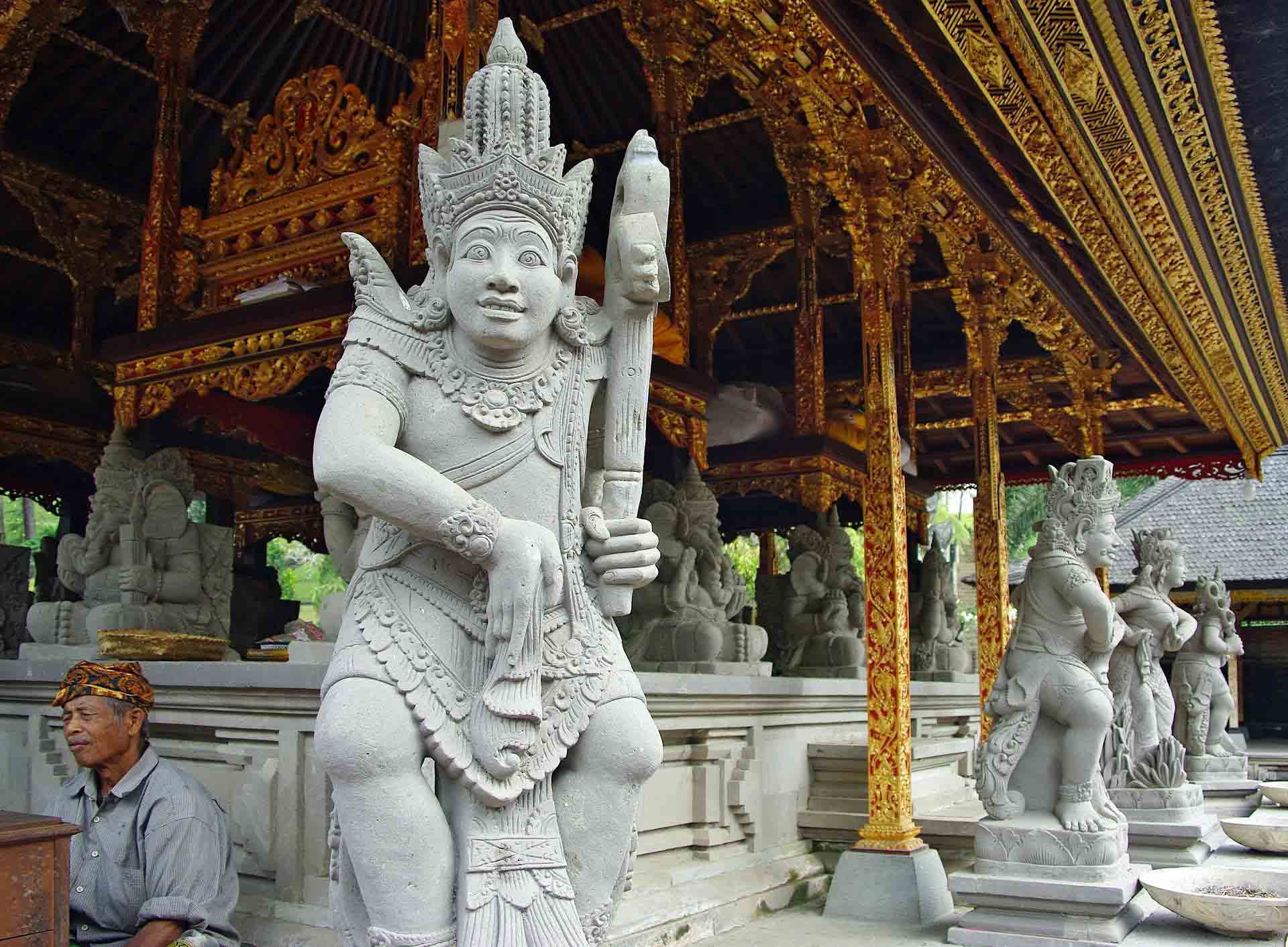
This sacred site dedicates itself to Wisnu, the Hindu deity who embodies the supreme consciousness, Narayana. To the left of the temple, the modern villa structure, Istana Tampaksiring, stands atop a hill. Builders erected it for President Sukarno’s visit to Bali in 1954, and it now serves as a rest house for significant state guests.
 Source: Unsplash
The Legend of Tirta Empul Temple
Tirta Empul Temple (9th-14th centuries) was founded around a large water spring at the beginning of the Warmadewa dynasty. The water source, Tirta Empul, gave its name to the temple. The Pakerisan River flows from the spring. Jaba Pura (front yard), Jaba Tengah (central yard), and Jeroan (inner yard) make up the temple. Jaba Tengah includes two pools with showers: Pengelukatan, Pebersihan, Sudamala, and Pancuran Cetik (poison).
Lontar Usana Bali states that God Indra created Tirta Empul during his battle with Mayanadenawa, the King of Bedahulu. The king is said to be very powerful and can disappear. Because of his supernatural powers, Mayanadenawa considered himself to be God, for that reason God Indra fought him. In a battle that unfolded in the area, Mayanadenawa and his troops found themselves cornered. They walked with their feet tilted, which led to the area being named Tampaksiring.
In a state of urgency, Mayanadenawa created a poisoned spring (Yeh Cetik) to destroy Bhatara Indra’s troops. It turned out that the tactic worked, because of fatigue due to constant fighting, finally, many of God Indra’s troops drank Yeh Cetik. As a result of enemy tactic, the strength of God Indra’s troops was greatly reduced.
To deal with the problem, God Indra then stuck a pennant-shaped weapon into the ground. Immediately, a spring appeared that pooled upwards from the former stab of the celestial king’s weapon. After drinking the spring, God Indra’s troops recovered as usual. Centuries later, in 882 Caka, King Indrajaya Sigha Warmadewa arranged and perfected the spring into a water garden, naming it “Tirta Empul,” which means Steaming Waters.
 Source: Pixabay
The Charm of Tirta Empul Temple
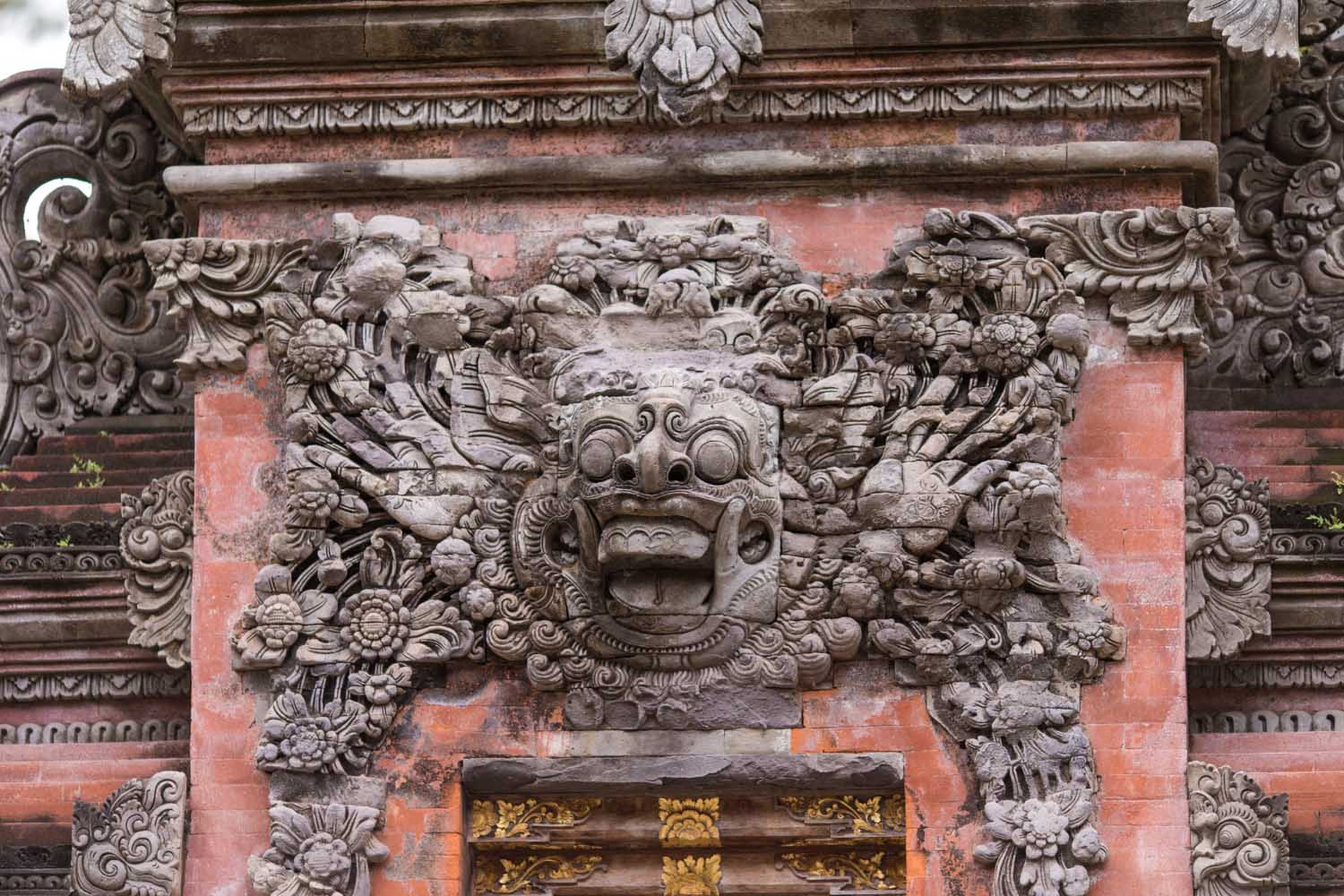
You’ll enter the outer courtyard of the temple as soon as you pass through the large Balinese stone gate (known locally as a Candi Bentar). The area of temples called Jaba sisi is where you’ll be the first time you visit. You’ll find a Candi Bentar on the wall leading to the inner courtyard at the end of the courtyard. At the top of the gate is a Kala with fangs sticking up and open arms with hands. This design is distinct from Kala designs elsewhere because of its fangs and open hands.
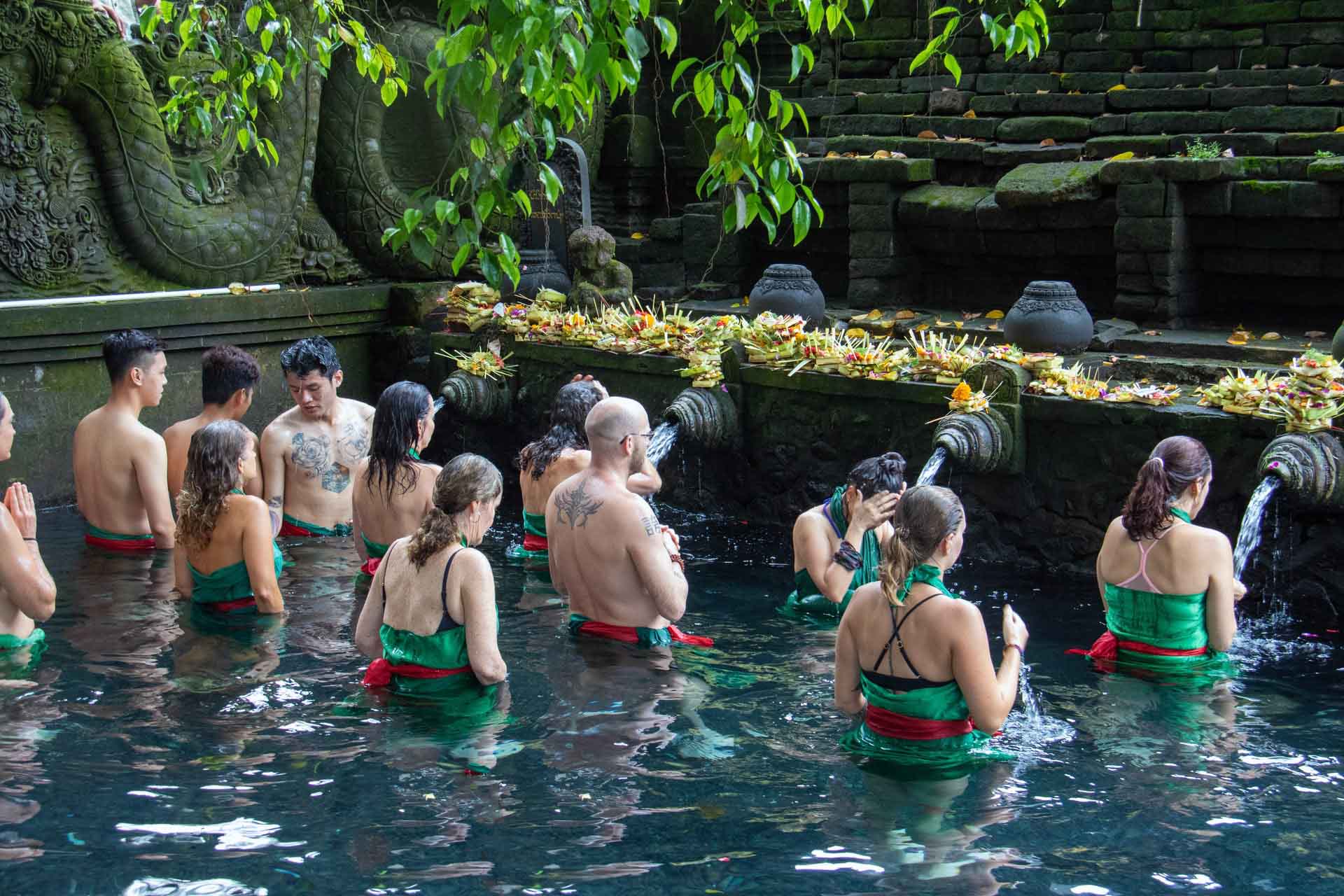
Upon entering the temple’s inner courtyard, you will find the jaba tengah area. The purified water rapidly spurts from 26 spouts into the two purification pools, one of which is a large, crystal-clear pool. If you’re into trying a melukat, it all begins with putting canang at every water spout. Every spout is unique, having its own function and name, like Tirta Sudamala, Tirta Penglukatan, and Tirta Panegtegan.
The Sacred Ritual and Beauty of Pura Tirta Empul
After you’ve placed the canang, you clean your face three times, rinse your mouth three times, and take one drink at each spout. Next, just hold your hands to your chest and say a prayer. Visitors need to stand in line to perform the melukat ritual. As part of a cleansing ritual, worshippers wash their entire bodies under the first water spout, starting with their heads. When the worshippers have washed their heads, they move on to the next queue.
There is a shrine that is colorful and well-decorated, while the white outfits worn by Balinese visitors contrast with the colourful shrines. Most of the temple’s water is supplied by a large spring at the entrance. In the spring, you can see small fish swimming among the reeds, which are teeming with green algae. Pura Tirta Empul also has a really neat garden and the beautiful nature all around the temple makes Pura Tirta Empul even more attractive. You may quickly explore this part of the temple by walking behind the shrines.
 Source: Freepik
Where is Tirta Empul Temple?
You can reach the Tirta Empul Temple from many different locations in addition to Ubud’s central town, from Ubud’s eastern edge, and Ubud’s southern region. The distance from Denpasar airport is 54 kilometers, from Kuta 50 kilometers, from Seminyak 50 kilometers, and Ubud 30 minutes north of Ubud. You can find the location of Tirta Empul Temple at this address, Tampaksiring, Kec. Tampaksiring, Kabupaten Gianyar, Bali 80552
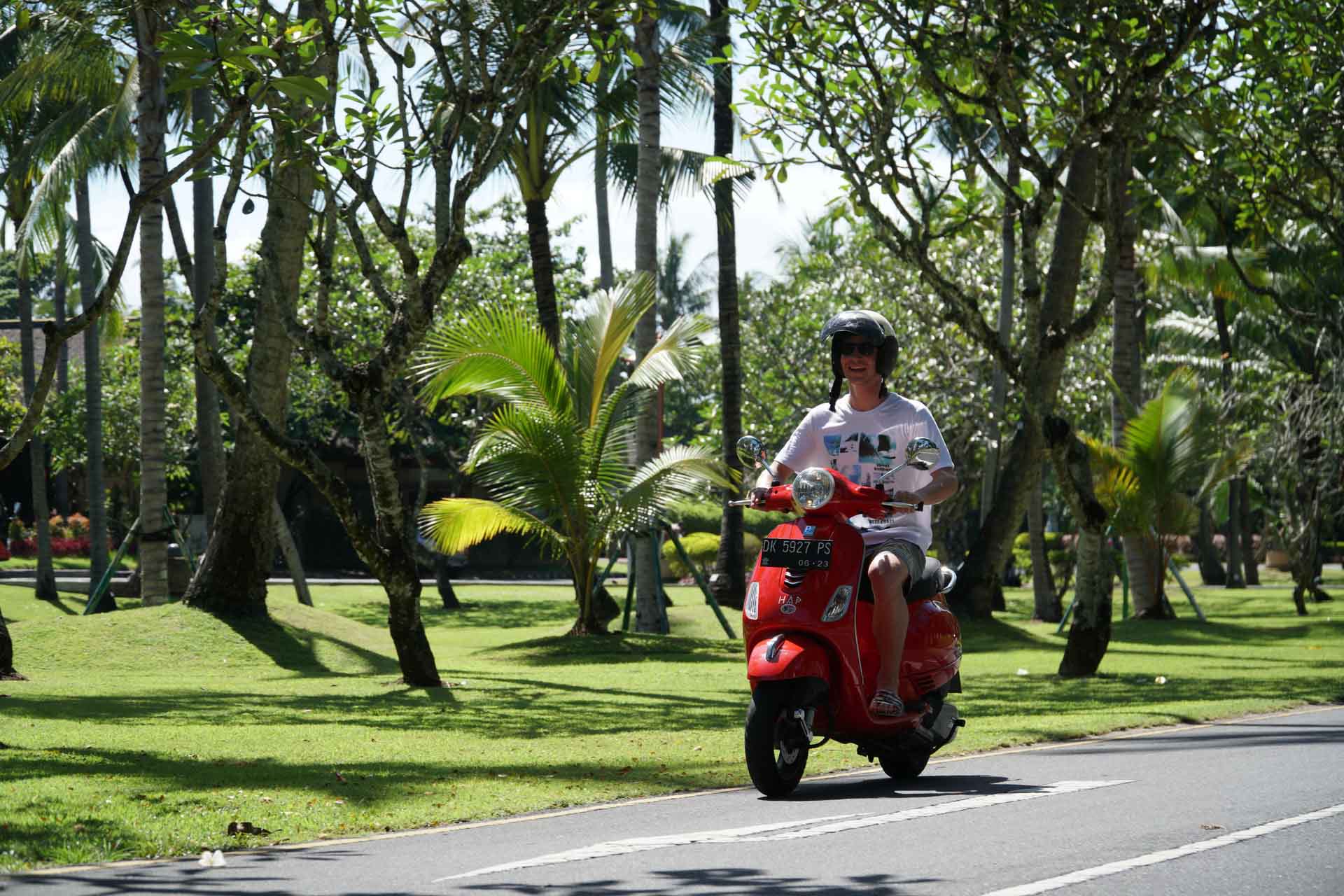
Renting a motorbike is the best way to get around here, but hiring a driver is the safest method to visit some of the nearby sights like the Ubud Monkey Forest, Tegalalang Rice Ubud, Rafting, and waterfalls around Ubud.
Adult visitors to Tirta Empul Temple must pay 50,000 IDR for entrance, while children pay 25,000 IDR. There is a ticket counter near to the entrance gate, so you need to get there first. The payment should be cash in Indonesian Rupiah (IDR), so prepare small cash before you come here.
Read: Taste Bali Swing Experience
 Source: Unsplash
Remember Before Visiting the Temple
When visiting Tirta Empul Temple, it is important to dress appropriately. Men can wear pants or shorts, but avoid shorts that end above the knee. Women should wear shawls or sarongs. Not just that, taking a bath is a must before entering the temple. You can wash your feet and hands at the pools near the entrance to the temple. Respect the prayer in the prayer area, don’t try to take photos of them from inside.
Read: Recommendation Visit Temple in Bali
Tips for Visiting Tirta Empul Temple
Dress respectfully
A sarong and sash are required (you can rent them at the entrance). Ensure your shoulders and knees are covered—a sign of respect when entering the temple.
Pack a change of clothes
If you plan to join the purification ritual (Melukat), you’ll get wet in the holy springs. Bring something dry to wear afterwards so you can continue exploring comfortably.
Go early in the morning
By mid-morning, the temple gets busy with both locals and visitors. Arriving before 9 AM gives you a calmer atmosphere and beautiful, soft photo light.
Follow the flow of the ritual
Watch how locals move through the bathing pools—always from left to right. Skip the final spouts, as those are reserved for special ceremonies.
Entry fees and offerings
Tickets cost around IDR 50,000 per adult. If you join the ritual, consider leaving a small donation to support temple upkeep.
Put some cash on Your Wallet
The ticket counter and nearby vendors usually don’t take cards, so bring Indonesian Rupiah in small notes.
Make it a day trip
After visiting Tirta Empul, add nearby attractions to your itinerary. Gunung Kawi Temple and the famous Tegalalang Rice Terraces are just a short ride away.
Frequently Asked Questions About Tirta Empul Temple
What should I wear to Tirta Empul Temple?
Everyone entering the temple must wear a sarong and sash. Don’t worry if you don’t have one, rentals are available at the entrance. Remember to cover your body and knees to show respect.
How much is the entrance fee?
Tickets cost around IDR 50,000 per adult, and children usually pay less. If you participate in the ritual, leaving a small donation for temple upkeep is also appreciated.
Can tourists join the purification ritual (Melukat)?
Yes! Visitors are welcome to join the sacred bathing ritual in the spring pools. Just follow local custom start from the left, move to the right, and skip the last few spouts reserved for special ceremonies.
When is the best time to visit?
The temple is calmest in the early morning (before 9 AM). You’ll enjoy a quieter atmosphere and softer light, perfect for reflection and photos.
What else can I see nearby?
Tirta Empul is close to other beautiful spots like Gunung Kawi Temple and the Tegalalang Rice Terraces. It’s easy to combine them into one memorable day trip.
Set and Go to Temple
So, what are you waiting for? Tirta Empul temple is one of the best ways to relax and freshen your thoughts. Feel the incredible cultural vibes around it. Don’t forget to get accommodation near the Tirta Empul Temple. Ubud Villas Rental by Red Lotus Bali Property gives you a variety of retreat villas choices to choose from.